Sixteen subjects · built on primary sources
Flying in South Africa, answered
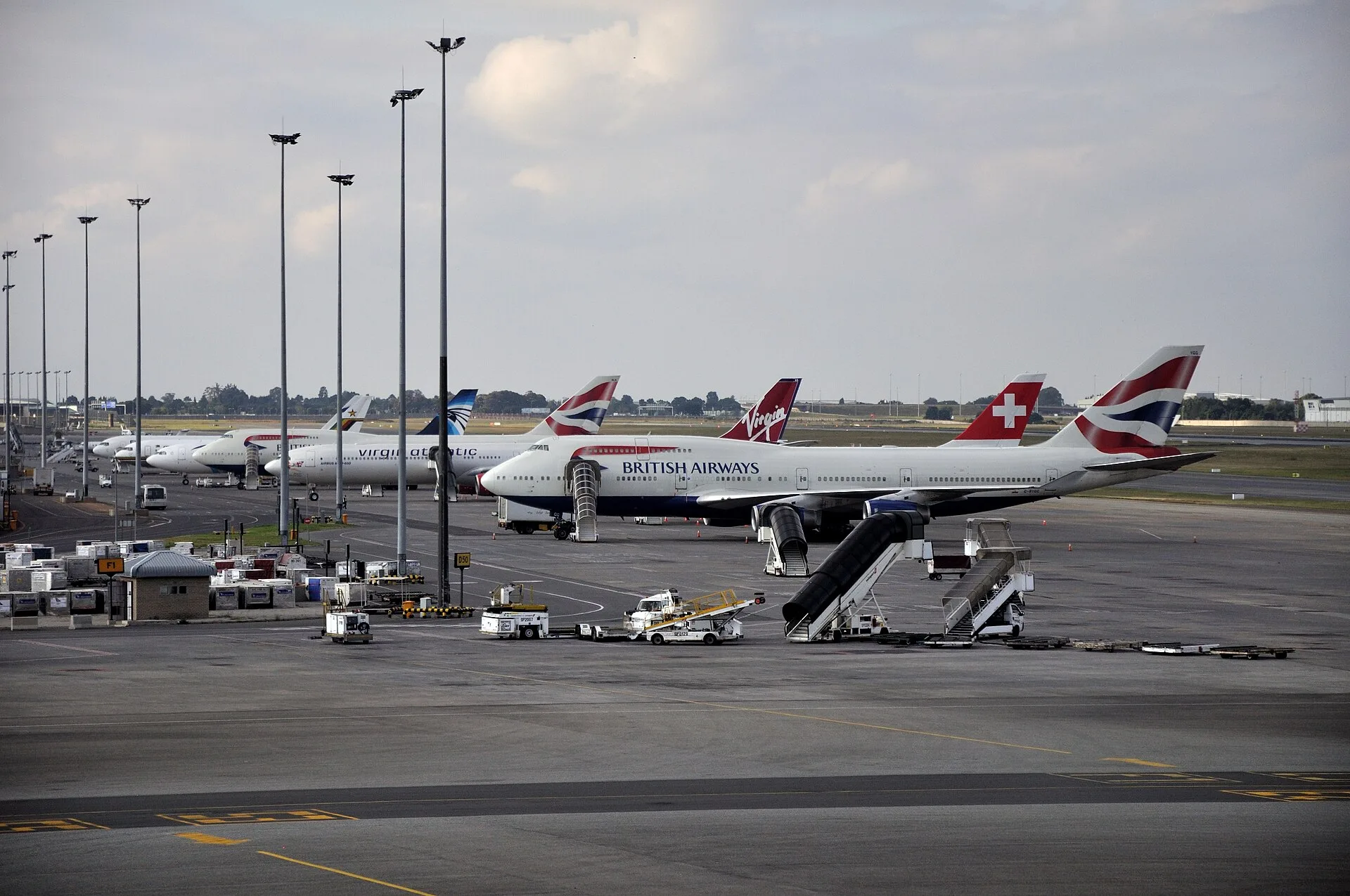
Photo: Hansueli Krapf, Wikimedia Commons (CC BY-SA 3.0)

Sixteen subjects, chosen from the questions South African travellers actually put to search engines rather than from what an airport press office would like you to read. Each one is answered here as plainly as we can manage, with every figure traceable to a source we name and dated to the day we checked it.
Every subject below has a full page of its own, built on primary sources. Where a figure moves — a parking tariff, a train fare, an opening hour — we say so rather than publish a number we cannot stand behind today.
 01Visas & entryWho needs one, who does not, and the affidavit you need to travel with a child.Read the guide
 02The GautrainThe only airport rail link in the country: where it goes, when it runs, what it costs.Read the guide
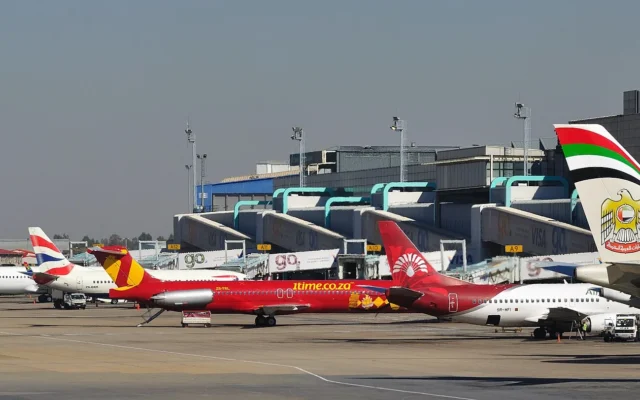 03Customs & declarationThe Traveller Declaration, duty-free allowances and what you may not bring in.Read the guide
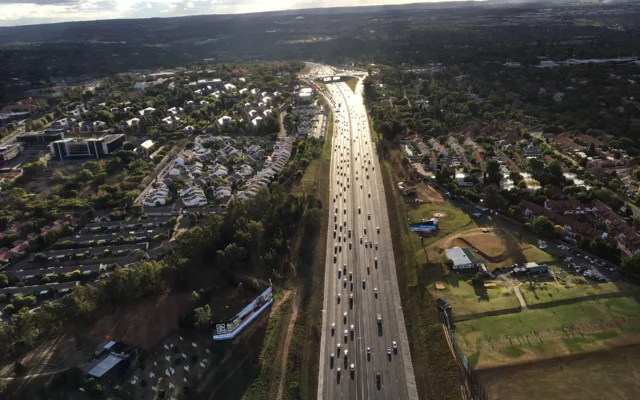 04ParkingShort stay, long stay and the kerbside drop-off, airport by airport.Read the guide
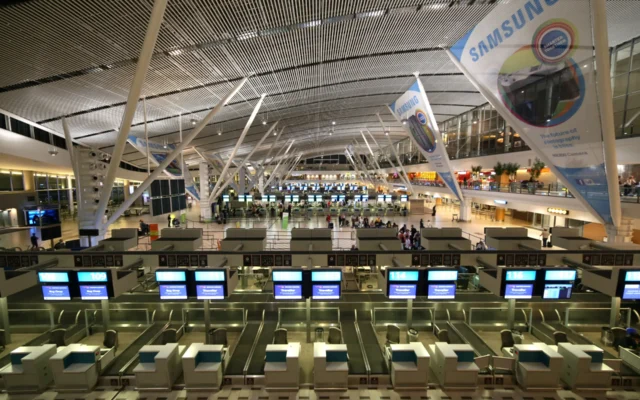 05LoungesWhich lounges each terminal has, and how you get in without a business-class ticket.Read the guide
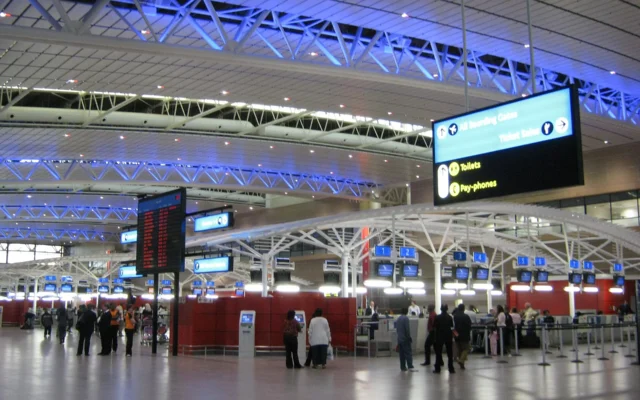 06ArrivalsWhere to meet someone, and how long it really takes to clear a flight.Read the guide
 07Terminals & mapsHow the terminals connect, and the walk between them.Read the guide
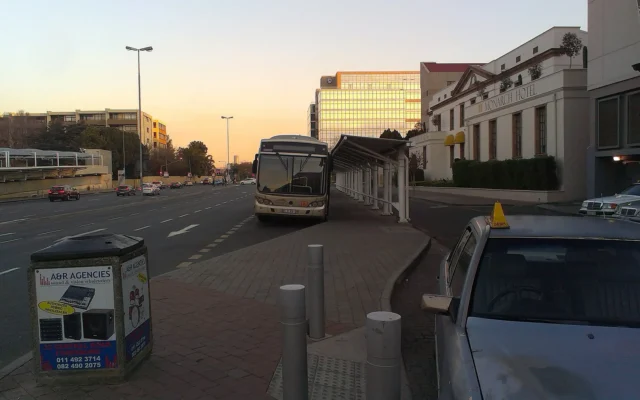 08Transfers & shuttlesGetting into town when there is no train: metered, app-based or hotel shuttle.Read the guide
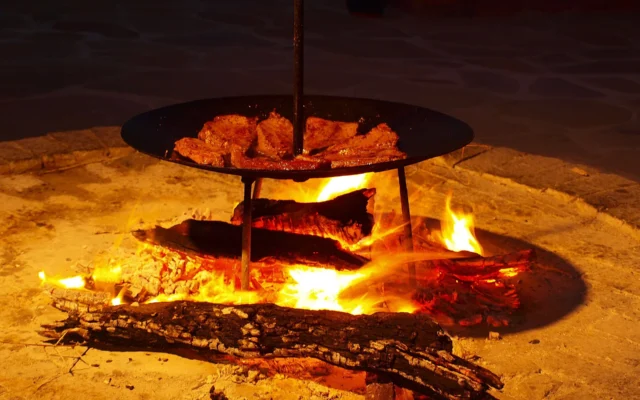 09Food & drinkWhat is open before security, what is open after, and until when.Read the guide
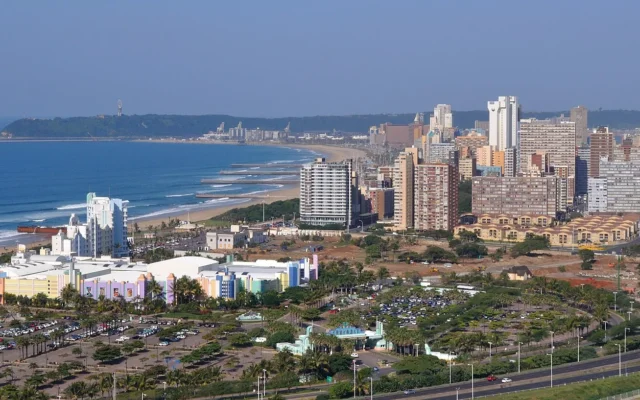 10HotelsThe ones you can walk to, and the ones that only feel close.Read the guide
 11Car hireWhere the desks are, where you return the car, and what the drive out is like.Read the guide
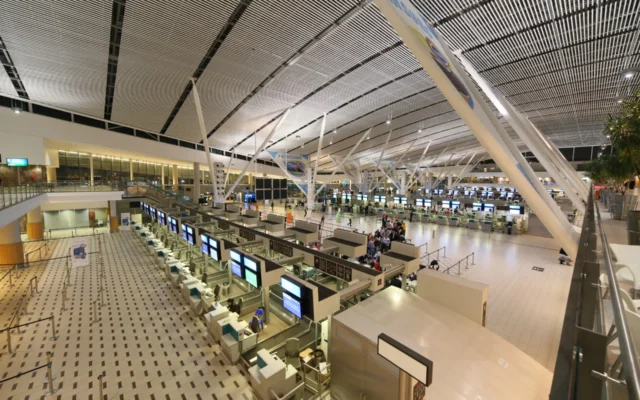 12Security & liquidsThe 100 ml rule as it is applied here, and realistic queue times.Read the guide
 13Wi-Fi & chargingHow much free Wi-Fi you get and where the working sockets are.Read the guide
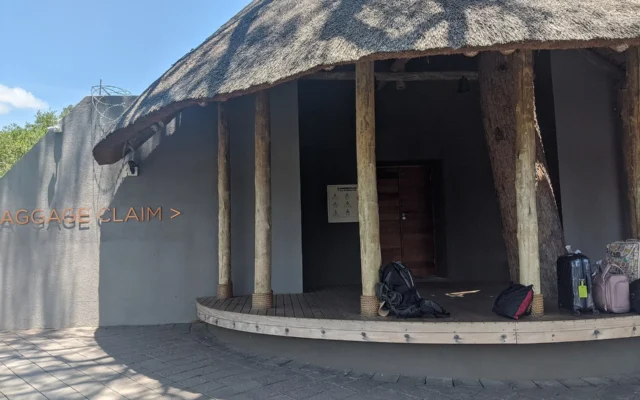 14Luggage & lost propertyLeft luggage, oversize items and who to call when a bag does not arrive.Read the guide
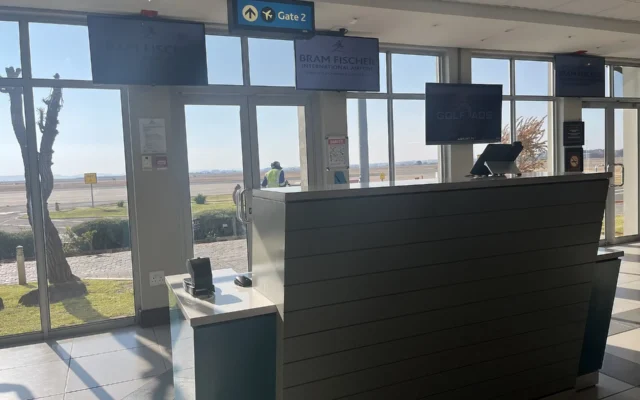 15DeparturesCheck-in cut-offs, and how early is early enough at each airport.Read the guide
 16Delays & the weatherWhy Cape Town delays in winter and Johannesburg delays in summer.Read the guide
Start here, in this order
If you are planning a first trip and do not know which of the sixteen matters to you, this is the sequence that follows the shape of an actual journey.
- Decide which airport you are flying into. Only three South African airports see international passengers at all, and that constrains everything after it. Johannesburg, Cape Town or Durban.
- Check your passport, not your visa. Most visitors need no visa; a great many are stopped by blank pages and validity dates instead. Entry requirements.
- If a child is travelling, assemble the folder now. Weeks, not days — the documents are obtainable given time and almost none of them on the morning of a flight. Documents for children.
- Pick the month if you still can. The airports’ own counts show a 46 per cent swing at Cape Town and a month in October that nobody expects to be busy. When to fly.
- Work out your connection honestly. If it passes through Johannesburg between international and domestic, two hours is the minimum. Connecting at O. R. Tambo.
- Submit the Traveller Declaration the day before. Required since 1 July 2026, within 24 hours of departure. How it works.
- Arrange the transfer before you land, particularly for an evening arrival. Transfers and car hire.
The five things that actually go wrong
Not the things travellers worry about — the things that genuinely cost people flights, money and days.
- The international-to-domestic connection at O. R. Tambo. Terminal A is international, Terminal B is domestic, and between them you clear immigration, reclaim your own checked bag and check it in again. Sixty minutes is a missed flight. This is the single most common way a South African trip goes wrong.
- The passport, not the visa. Two completely blank facing pages are required for the entry stamp, and endorsement pages do not count. Validity must run 30 days beyond your intended departure, not your arrival.
- Child documents. Anyone under 18 needs proof of parentage, and a consent affidavit where a parent is absent. Airlines check this before boarding at the other end, because they carry the cost of a refused passenger.
- Two tickets instead of one. Booking the long-haul and the domestic flight separately is often cheaper and means nobody has sold you a connection. If you miss the second flight, you buy a new one.
- A Cape Town departure on a winter afternoon. Only one runway there is long enough for jets, so a north-westerly front has nowhere to send the traffic. Fly in the morning between May and August.
What is genuinely different about flying in South Africa
Most of what you know from flying elsewhere transfers. These are the points where it does not.
There is one airport train in the entire country
The Gautrain, from a station inside the O. R. Tambo terminal complex, reaching Sandton in about fifteen minutes. Cape Town has no rail link of any kind and neither does King Shaka. Every other airport transfer in South Africa is a road transfer, which is why the traffic, not the distance, is the variable that ruins estimates. The Gautrain guide.
You clear customs at the first point of entry
Like the United States and unlike most of Europe, South Africa makes arriving passengers clear immigration and collect their checked baggage where they land, even when they are flying on within the country. That one rule is what turns a Johannesburg connection into a two-hour operation.
Four airports called “International” have no international flights
In 2025/26 only three of the nine state-operated airports recorded scheduled international passengers. Chief Dawid Stuurman International in Gqeberha recorded 70 for the whole year; Bram Fischer International, Upington International, George and East London recorded none. The names reflect customs facilities, not route networks. Every airport by the numbers.
The plug, the side of the road, and the money
South Africa uses the large three-pin Type M socket at 230 V, which many universal adapters do not carry. Traffic drives on the left. Card payment is accepted almost everywhere, including in taxis and at airport parking, and cash is rarely necessary — but currency above the declared threshold is one of the things customs actively looks for.
The financial year is not the calendar year
South Africa’s financial year runs from 1 April to 31 March, and the airport operator reports on it. That is why a passenger figure for “2025” may be either, and why the two differ: Cape Town handled 11,333,736 passengers in the 2025/26 financial year and 11,113,490 in calendar 2025. A passenger number published without its period is worth very little, including on this site, which is why every one of ours carries one.
What changed in 2026
One substantive change, and it affects every traveller. Since 1 July 2026 the South African Revenue Service requires an online Traveller Declaration from everyone entering or leaving the country by air, land, sea or rail — citizens, residents and visitors alike, children included. It must be submitted no more than 24 hours before departure from the country you are travelling from.
SARS has also stated, in the same published guidance, that travellers will not be denied entry or departure solely for not having completed one. Both halves of that are true and most reporting carries only one. The risk was never the form; it is in declaring the contents of your luggage incorrectly, which can mean detention or forfeiture of goods and penalties. The declaration in full.
How this guide is put together
Three rules govern everything in it.
- Primary sources only. Customs allowances come from the South African Revenue Service’s own pages, passenger numbers from the airport operator’s monthly filings, entry rules from Home Affairs and South African missions. Not from other travel sites.
- Every figure carries a date. A number without the period it covers is an opinion. Where a page says something was checked on a given day, that is the day we read the source.
- Where we have not checked, we say nothing. Parking tariffs and train fares are the fastest-rotting information in travel. We leave them out rather than repeat a figure from a blog, and we tell you where to read the current one.
That third rule costs us traffic. It also means that when this site does give you a number, you can act on it. The full sourcing note sets out where each class of figure comes from, and the editorial policy covers corrections.
The longer articles
Five subjects are big enough to need more than a reference page. Each is built on the same sources and goes considerably deeper.
- How long do you need to connect at O. R. Tambo? — the clock, stage by stage, and what happens when you miss it.
- The best and cheapest months to fly to South Africa — month by month, airport by airport, from the operator’s own counts.
- The South Africa Traveller Declaration, explained — and the duty-free allowances, correctly.
- Johannesburg, Cape Town or Durban: which airport? — what actually separates the three gateways.
- Taking a child to South Africa: the documents you need — including the three exemptions most sites omit.
Common questions
How many airports does South Africa have?
Twenty-two have an IATA code and scheduled passenger flights. Nine of those are operated by Airports Company South Africa and publish monthly passenger figures; together they carried 41,135,224 passengers in the 2025/26 financial year. Three of them — O. R. Tambo, Cape Town and King Shaka — account for 90 per cent of that.
Do I need a visa for South Africa?
Citizens of around seventy-five countries, including the United Kingdom, the United States, Canada, Australia, Japan, Brazil and most of the European Union, may enter for tourism without one, generally for up to 90 days. What stops far more people than the visa is the passport: two completely blank facing pages are required, and validity must extend 30 days beyond your intended departure.
Is there a train from the airport in South Africa?
Only at O. R. Tambo in Johannesburg, where the Gautrain runs from a station inside the terminal complex to Sandton in about fifteen minutes. Cape Town International and King Shaka have no rail link at all. You need a Gautrain gold card bought at the station, and the airport service does not run through the night.
How early should I get to a South African airport?
Two hours for a domestic departure and three for an international one at O. R. Tambo, where the 06:00 to 08:00 domestic security bank is the worst queue in the country. At the smaller airports ninety minutes domestic is comfortable. The hard limit is the check-in cut-off: roughly 45 minutes before a domestic departure and 60 before an international one, and it closes on time whatever the queue is doing.
Which month is cheapest to fly to South Africa?
June, on the airports’ own passenger counts: it is the quietest month across the network and runs 46 per cent below the December peak at Cape Town. The trade-off is that June is the wet, windy end of the Cape winter and carries the highest delay risk of the year.
Is the Traveller Declaration compulsory?
Yes, since 1 July 2026, for everyone entering or leaving South Africa by air, land, sea or rail, children included, submitted no more than 24 hours before departure. SARS has also said nobody is refused entry or departure solely for not having completed one. Air and sea passengers who stay inside a designated transit area are exempt.
If something here is wrong
Rules change, and they change without warning. If a figure on this site no longer matches the official source, the official source is right and we are out of date. Tell us and we will correct it and say when we did.