The South Africa airport guide
How the terminals connect, and the walk between them
Photo: BlogDeBanderas, Wikimedia Commons (CC BY-SA 4.0)

Only one South African airport has more than one terminal, and getting the walk between them wrong is the most common way a trip through Johannesburg goes badly. Everywhere else is a single building, which is why connections elsewhere feel so much easier.
At a glance
- O. R. Tambo
- Two terminals, A and B
- Walk between them
- 8–10 minutes
- Cape Town
- One terminal, two piers
Terminals
Photo: Skatebiker, Wikimedia Commons (CC BY-SA 4.0)

O. R. Tambo: Terminal A and Terminal B
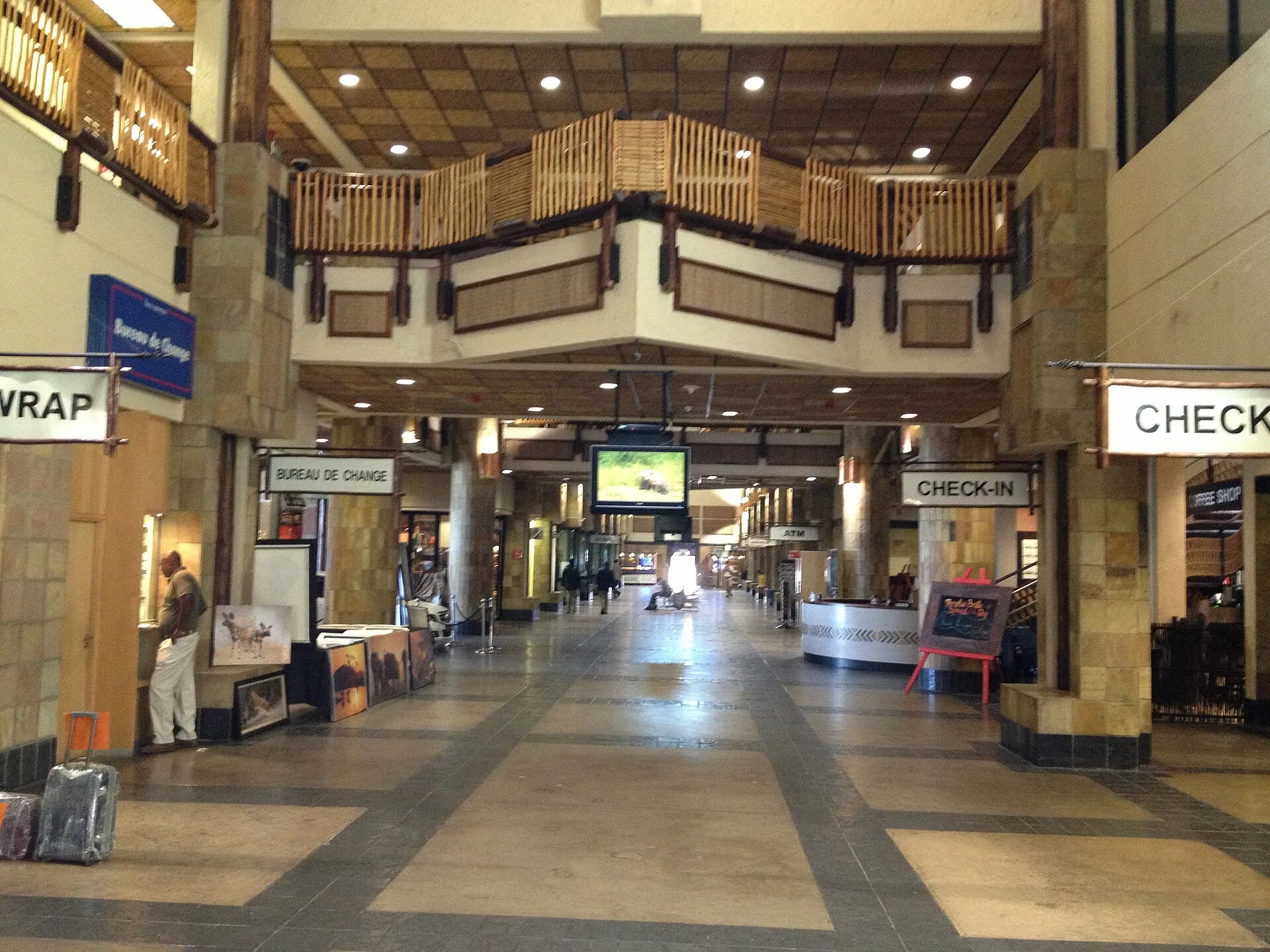
Terminal A is international. Terminal B is domestic. They are joined by a walkway inside the building, so you do not go outside and you do not need a shuttle. But it is a genuine eight to ten minute walk with luggage, and longer from the far gates.
Signage is clear and the route is continuous. The thing that costs time is not navigation, it is the distance plus whatever you are carrying.
The connection that goes wrong
International to domestic at O. R. Tambo means: clear immigration, collect your checked bag from the belt, walk to Terminal B, check the bag in again, clear domestic security, find the gate.
Sixty minutes is a missed connection. Ninety is tight. Two hours is comfortable. If an airline sells you a sixty-minute connection on separate tickets, it is selling you a risk it does not carry.
International to international within Terminal A is a different proposition entirely — ninety minutes is workable if your bag is checked through, which on a single ticket it usually is.
Cape Town and the rest
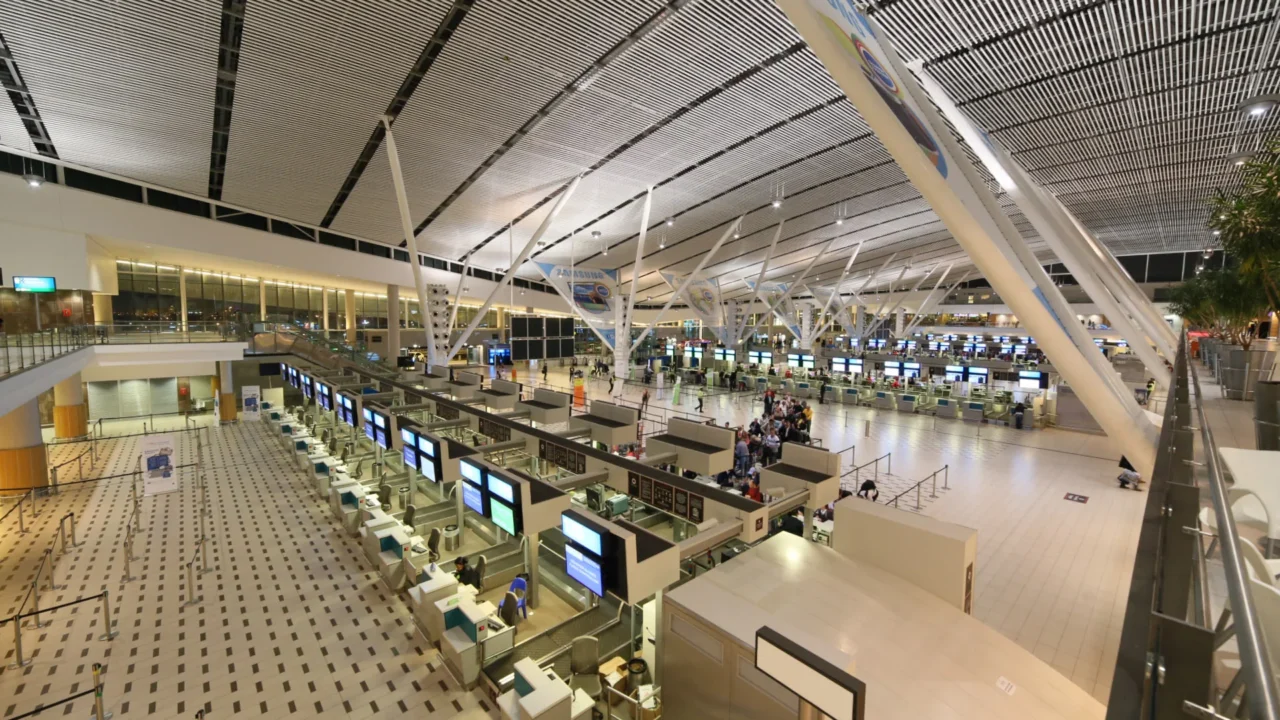
Cape Town is one terminal with domestic and international piers either side of a shared central hall. There is no inter-terminal walk. An international-to-domestic change still means immigration, baggage reclaim and a second check-in, but the distance between the two is minutes.
King Shaka, Gqeberha, George, East London, Bram Fischer, Kimberley and Upington are single-terminal and small enough that the question does not arise. At the smallest of them the walk from kerb to gate is a couple of minutes.
Maps
Each airport publishes its own terminal map, and those are the ones to use: they are updated when a pier or a gate range changes, and a map printed on a travel site is not. Links are on each airport’s page in our airport index.
Landside and airside: the distinction that explains the building
Every South African terminal divides into two zones, and almost every practical question about what is available answers itself once you know which zone you are in.
Landside is everything before security: check-in halls, arrivals halls, the car parks, the full-service restaurants, the banks and the shops that are open to anyone, including people who are not flying. Airside is everything after: the gates, the lounges, duty free and the quick-service food. Airside is smaller, the choice is narrower, and at the smaller airports it thins out sharply after the last departure wave.
The reason this matters more in South Africa than elsewhere is that the good food is landside. If you want to eat a proper meal before a flight from O. R. Tambo or Cape Town, do it in the check-in hall before you go through, not after. What is open, and until when.
Eight of the nine are one building
It is worth stating plainly, because the fear of getting lost in a South African airport is almost entirely a fear of one specific airport. O. R. Tambo is the only one of the nine state-operated airports with more than one terminal. Cape Town, King Shaka, Chief Dawid Stuurman, George, King Phalo, Bram Fischer, Kimberley and Upington are each a single building.
At Cape Town, which handled 11,333,736 passengers in 2025/26, the domestic and international piers sit either side of one shared central hall. That is the whole reason connections there feel so much easier: there is no second building to find and no walk between them. At King Shaka, built in 2010 for considerably more traffic than its 5,616,199 passengers, the walk from kerb to gate is genuinely short.
At the small airports the terminal is small enough that no map is required at all. Upington moved 62,653 passengers in the whole year; Kimberley 170,738. You will find the gate.
Finding things inside the building
- Car hire desks are in the arrivals area, landside, at all three major airports. There is no off-site shuttle to a remote lot in the way there is at many American airports.
- The Gautrain station at O. R. Tambo is inside the terminal complex, signed from both arrivals halls. It is the only airport rail station in the country.
- Banking and currency exchange are landside, which matters if you want cash before you pass security; card payment works nearly everywhere in South Africa, so most visitors do not need to.
- Left luggage exists at two airports only. Do not plan a day in the city around dropping bags at a small airport. Luggage storage.
- Prayer rooms, baby-change facilities and assistance desks are landside at all three majors and signed from the main halls.
Common questions
How do I get from Terminal A to Terminal B at O. R. Tambo?
On foot, through a walkway inside the building. No shuttle, no going outside. Allow eight to ten minutes with luggage, more from the far gates.
How much time do I need to connect at O. R. Tambo?
Two hours between international and domestic, because you clear immigration, collect your bag and check it in again in the other terminal. Ninety minutes international-to-international within Terminal A.
Does Cape Town airport have two terminals?
No. One terminal with domestic and international piers either side of a shared central hall, which is why connections there are quicker than at O. R. Tambo.
Which South African airports have more than one terminal?
Only O. R. Tambo. Every other airport with scheduled service is a single building.
Checked 1 November 2026. Where a figure moves — a fare, a tariff, an opening hour — we say so rather than publish a number we cannot stand behind today. How we source and check everything on this site.
What is the difference between landside and airside?
Landside is before security and open to anyone, including people who are not flying; airside is after security and only for passengers. In South African airports the full-service restaurants, the banks and the car hire desks are landside, and the choice airside is narrower — which is why you should eat before you go through rather than after.
Do I need a terminal map for a South African airport?
Only for O. R. Tambo, and there the only thing you need to know is that Terminal A is international and Terminal B is domestic, joined by an indoor walkway. Every other state-operated airport in the country is a single building.
Is there a shuttle between terminals at O. R. Tambo?
No, and you do not need one. The two terminals are joined by a walkway inside the building, so you never go outside. Allow eight to ten minutes with luggage and more from the far gates.