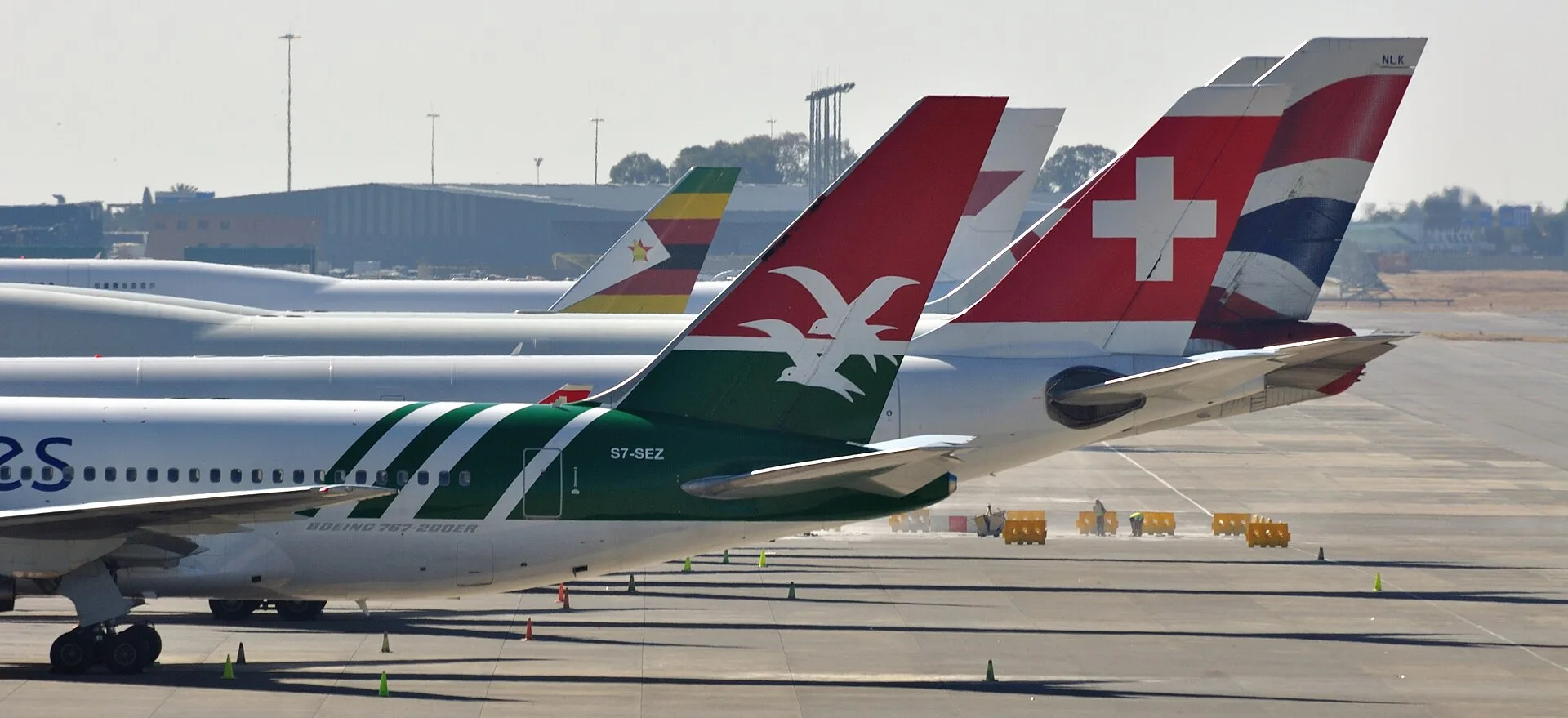
The short answer: ninety minutes if you are staying inside Terminal A, and two hours if you are changing between an international and a domestic flight. The second case is the one that goes wrong, because at O. R. Tambo an international-to-domestic connection is not a connection in the way most airports mean it. You clear immigration, you collect your own checked bag from the carousel, you walk it to the other terminal and you check it in again. Sixty minutes is a missed flight. This page sets out why, what the clock actually looks like, and what to do when it goes wrong anyway.
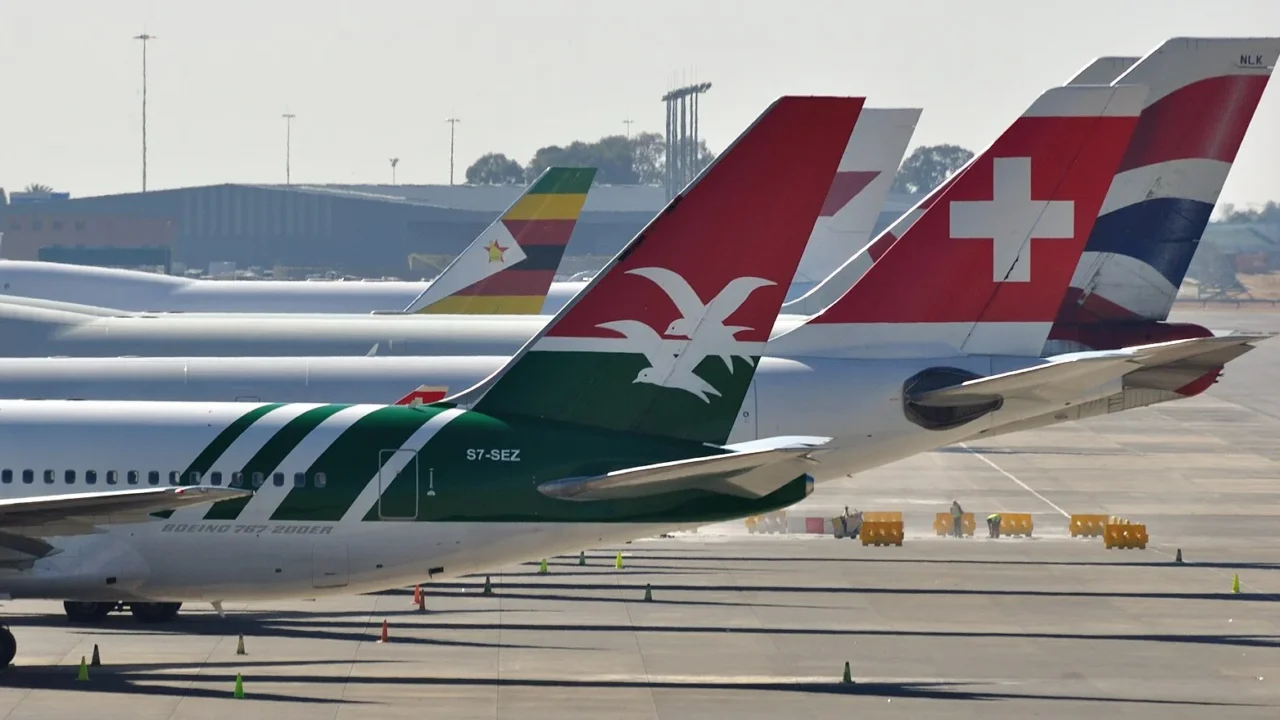
O. R. Tambo
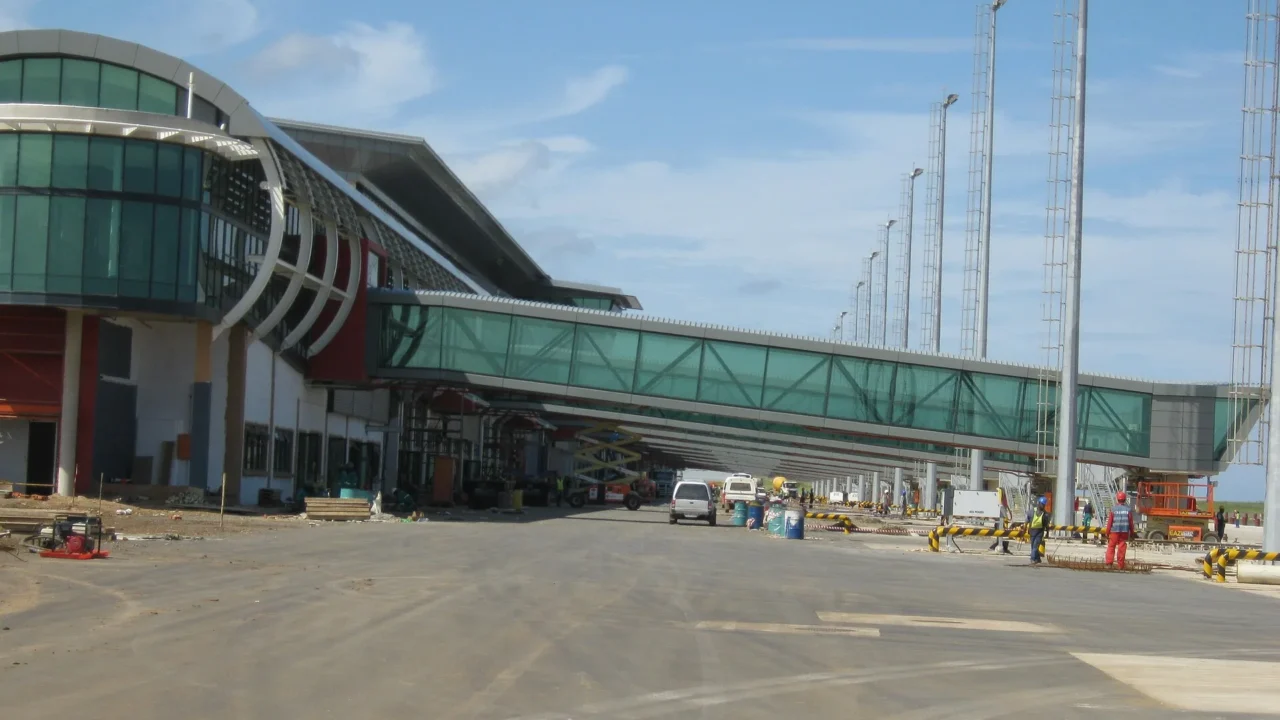
Photo: Hansueli Krapf, Wikimedia Commons (CC BY-SA 3.0)

At a glance
- International to international
- 90 minutes, inside Terminal A
- International to domestic
- 2 hours, and you re-check your bag
- Domestic to international
- 2 hours
- Domestic to domestic
- 60 minutes, inside Terminal B
- Walk between terminals
- 8 to 10 minutes with luggage, indoors
- Check-in cut-off
- 45 min domestic, 60 min international
Why O. R. Tambo is harder than it looks
O. R. Tambo is the busiest airport in Africa. It handled 20,083,399 passengers in the 2025/26 South African financial year, which runs from 1 April to 31 March, and 8,196,340 of those were on international flights — about 41 per cent, the highest international share of any airport in the country. Those two numbers are the whole problem in miniature: this is simultaneously the country’s international gateway and its domestic hub, and the two functions live in two different buildings.
From the operator’s monthly filings · FY2025/26
- 20,083,399passengers, FY2025/26
- +8.4%against the previous year
- 40.8%of them international
- Decemberbusiest month
- Februaryquietest month
- 25 kmto Johannesburg
Terminal A is international. Terminal B is domestic. They are joined by a walkway inside the building, so you never go outside and you never wait for a shuttle bus. That sounds reassuring, and for a straight international-to-international change it is. What makes the international-to-domestic change slow is not the walk. It is that South Africa, like the United States and unlike most of Europe and the Gulf, requires arriving passengers to clear immigration and reclaim their checked baggage at the first point of entry, even when they are continuing on another flight within the country.
So a passenger landing from London at 06:10 and booked on the 08:00 to Cape Town is not making a one-hour-fifty connection. They are making an arrival, a passport control, a baggage reclaim, a customs clearance, a walk, a check-in and a security screening, in that order, against a hard check-in cut-off 45 minutes before the Cape Town departure. The usable window is not 110 minutes. It is roughly 65.
The clock, step by step
These are the stages in the order you meet them, with the time each realistically takes on a weekday morning. They are not published figures — no airport publishes them — so treat them as the planning assumptions we use, and read the reasoning rather than the numbers alone.
- Aircraft doors to the immigration hall: 5 to 15 minutes. The international pier is long. From the far stands it is a genuine walk, and a bussed stand adds more.
- Passport control: 20 to 60 minutes. The most variable stage by far, for a structural reason explained in the next section.
- Baggage reclaim: 15 to 35 minutes from landing. The belt usually starts before you reach it, so this overlaps with the queue rather than adding to it.
- Customs: 2 minutes, or much longer. The green channel if you have nothing to declare and nothing is selected for inspection.
- Walk to Terminal B: 8 to 10 minutes. Indoors, signed, with trolleys. Longer with children or a wheelchair.
- Domestic check-in and bag drop: 10 to 20 minutes. It closes 45 minutes before departure whatever the queue behind you is doing.
- Domestic security: 10 to 30 minutes. The 06:00 to 08:00 bank is the worst queue in the country.
Add it up and the honest minimum is about 100 minutes with everything going well. That is why two hours is the figure to book to, and why an airline that sells you a 60-minute connection here is selling a legal minimum rather than a realistic one.
The 05:00 to 08:00 problem nobody warns you about
Long-haul flights into Johannesburg are not spread through the day. They arrive in a bank — a cluster of flights landing within a couple of hours of each other, because they all left Europe, the Gulf and North America the previous evening and all take roughly the same time to get here. Between about five and eight in the morning, O. R. Tambo therefore receives a large share of its entire international daily arrival volume at once.
Passport control is sized for an average, not for a peak. When several wide-bodies disembark into the same hall inside forty minutes, the queue is not a sign that something has gone wrong. It is the system working as designed, at the one hour of the day when the design is under most strain. The same hall clears an arriving flight in ten minutes at two in the afternoon.
That has a practical consequence worth more than any amount of general advice: if you have a choice of onward domestic departure, take a later one. A connection that looks painfully loose on paper — landing at 06:10, departing at 10:00 — is the sensible booking, and it costs you a morning rather than a day.
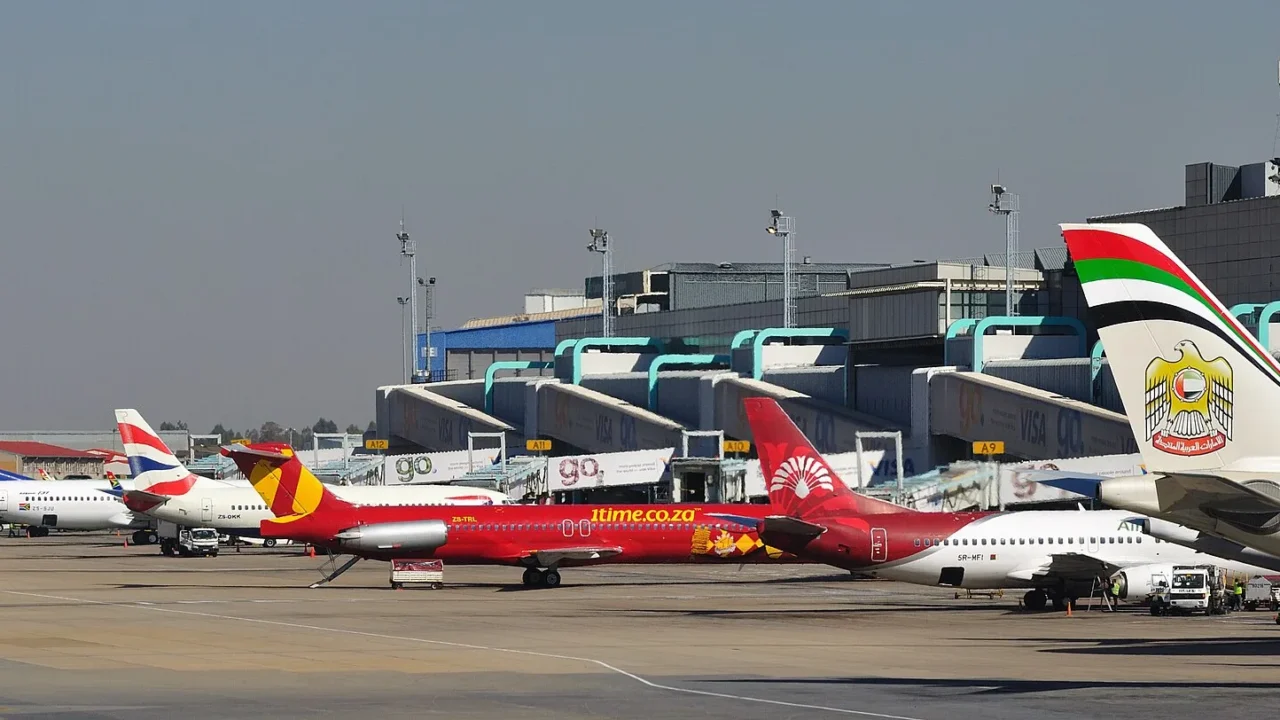
The morning bank
Photo: Hansueli Krapf, Wikimedia Commons (CC BY-SA 3.0)

One ticket or two: the distinction that decides everything
Everything above describes the walking and the queueing. What decides whether a missed connection is an inconvenience or a new ticket is something else entirely, and it is fixed at the moment you book.
A single ticket, or two flights on one booking reference
If both flights sit on one ticket — one booking reference, one itinerary, whether or not the two airlines are the same — the airline has sold you the connection and it owns the consequence. Miss the second flight because the first was late and you are rebooked onto the next available service at no charge. Your bag is usually checked through to the final destination, which does not save you from reclaiming it at O. R. Tambo, but does mean you hand it straight back at the domestic bag drop rather than checking in from scratch.
Two separate tickets
If you booked the long-haul flight and the domestic flight separately — common, and often cheaper, because South Africa’s low-cost domestic carriers do not sell through-tickets with most intercontinental airlines — then nobody has sold you a connection. The domestic airline has sold you a seat on a flight leaving at a particular time. If you are not there, you have missed it and you buy a new one. The long-haul carrier’s delay is not its problem.
On two tickets, treat three hours as the minimum and four as comfortable. The money you saved by booking separately is the money you are putting at risk, and a replacement domestic fare bought at the counter on the day is the most expensive way to fly in South Africa.
International to international: the easy case
If you arrive from abroad and leave again on an international flight — London to Johannesburg to Mauritius, say, or onward into the rest of Africa — you stay inside Terminal A and you do not formally enter South Africa at all. No immigration queue, no baggage reclaim, no customs, no terminal change. On one ticket, with the bag checked through, ninety minutes is workable and two hours is comfortable.
Two things still catch people. There is a security re-screening at the transfer point, which applies the liquids rules to anything you bought at your departure airport. And Terminal A is long: a gate change from one end of the pier to the other is a ten-minute walk, not a two-minute one.
Domestic to international: the quiet trap
The reverse direction — Cape Town or Durban in the morning, long-haul out of Johannesburg in the evening — feels much safer, and usually is. You land in Terminal B, collect your bag, walk to Terminal A and check in for the international flight. There is no immigration on the way because you never left the country.
The trap is at the other end. Early-morning domestic departures from Cape Town are the flights most exposed to weather. Cape Town has only one runway long enough for jets — 01/19 at 3,201 m; the second, 16/34, is 1,701 m and too short — so when a north-westerly winter front brings crosswind and low cloud there is nowhere to switch to. A two-hour domestic delay out of Cape Town in June is not unusual, and it turns a comfortable six-hour buffer in Johannesburg into a tight one.
The answer is not a longer connection on the day. It is to fly up the night before when the international departure matters, which is exactly why the airport hotels at O. R. Tambo are full of South Africans rather than foreign visitors.
What a missed connection actually looks like
Suppose it happens. You land late, the queue is the worst you have seen, and you watch the 08:00 to Cape Town close while you are still holding a bag.
- One ticket: go to the transfer or ticketing desk of the airline that was due to carry you onward, not the one that brought you in. They rebook. Frequencies between Johannesburg and Cape Town are high — this is one of the busiest air corridors in the southern hemisphere — so there is usually another departure within two or three hours.
- Two tickets: buy a new seat, at the airline’s own desk or app rather than through an agent, and look at the second or third departure rather than the very next one, which is the one everybody else in your position is also trying to buy.
- Either way: if the delay leaves you overnight, the airport hotels are walkable from the terminals, and the Gautrain station is inside the complex, so a night in Sandton is a fifteen-minute train ride rather than an hour in traffic.
Does Johannesburg have to be the connection at all?
Often, no — and this is where most advice about South African connections stops too early. Only three airports in the country recorded scheduled international passengers in 2025/26: O. R. Tambo, Cape Town and King Shaka. The other six operated by the state operator recorded almost none. Chief Dawid Stuurman International in Gqeberha recorded 70 international passengers for the entire year. George, East London, Bram Fischer, Kimberley and Upington recorded none at all.
Flying in
Only three South African airports see international passengers
This is the single most useful thing to understand about the network, and almost nobody states it plainly. In the 2025/26 financial year, scheduled international traffic was recorded at exactly three of the nine state-operated airports.
In practice that means a long-haul arrival reaches the Garden Route, the Eastern Cape or the Free State on a domestic connection through Johannesburg or Cape Town. Budget for it, and for the bag re-check that sometimes comes with it.
Total passengers, FY2025/26. Source: ACSA monthly passenger movements. How we check these.
Photo: fading, Wikimedia Commons (CC BY-SA 3.0)

What that means in practice is that a connection is going to happen somewhere, and you get to choose where. If your destination is the Western Cape, the Garden Route or the Winelands, flying directly into Cape Town removes the O. R. Tambo problem entirely. Cape Town is a single terminal, with the domestic and international piers either side of one shared hall, so even an international-to-domestic change there is a walk of minutes rather than a trek between buildings. Direct long-haul service into Cape Town from Europe and the Gulf is now substantial, and it is almost always the better routing for a Cape holiday.
For KwaZulu-Natal the arithmetic is different. King Shaka carried 5,616,199 passengers in 2025/26 but only 296,387 of them, about 5 per cent, were international. Durban is reached on a domestic connection by almost everybody, which means the O. R. Tambo transfer described here is, for most visitors to Durban, unavoidable. Build the two hours in.
King Shaka
Photo: Kieron Thwaites, Wikimedia Commons (CC BY-SA 2.0)

The passport problems that stop a connection before it starts
A connection can also fail at the counter rather than the clock, and the reasons are almost never the visa. South Africa admits the citizens of around seventy-five countries without one, including the United Kingdom, the United States, Canada, Australia, New Zealand, Japan, Brazil and most of the European Union. What stops people is the document itself.
- Two completely blank facing pages. Not two blank sides scattered through the book: two blank pages facing each other, for the entry stamp. Endorsement pages do not count. A well-travelled passport that looks fine to you can fail this, and the airline is expected to check it before you board at the other end.
- Thirty days of validity beyond your intended departure from South Africa, not beyond your arrival. A passport expiring five weeks after you land is not enough if you are staying four.
- Proof of onward travel. Routinely asked for at check-in on a one-way ticket, and occasionally at the counter on arrival.
None of this is specific to connecting, but all of it is worse when you are connecting, because the failure happens with a domestic flight already paid for and boarding in ninety minutes. The full entry-requirements guide covers the exceptions.
Connecting with children
Add thirty minutes to every estimate on this page, and then add the documents. South Africa applies specific rules to anyone under 18 arriving or departing, and they are checked at the counter rather than waived at the gate. A child travelling with one parent rather than both needs an unabridged birth certificate or equivalent parentage document, plus a parental consent affidavit or a court order, plus a copy of the absent parent’s identity document and their contact details.
Two exemptions are worth knowing because they are widely misreported. South African children travelling on South African passports do not need to produce a birth certificate, and a child in direct transit through an airport may be exempt — which is one more reason an international-to-international connection inside Terminal A is a different proposition from an international-to-domestic one. The documents for children, in full.
What the two hours buys you when nothing goes wrong
Booking two hours rather than one does not mean two hours of queueing. On a good morning you will clear everything in seventy minutes and find yourself with time at an airport that, unusually for South Africa, is genuinely equipped for it.
O. R. Tambo has the deepest set of lounges in the country: the independent day-pass lounges that sell entry at the door, the bank-linked lounges that come with the right card, and the airline lounges in Terminal A. Both terminals have their own, so a domestic connection is not shut out of them. It is also the one South African airport where something to eat is open essentially around the clock, with the full-service restaurants landside in the check-in halls and quick-service outlets airside. Wi-Fi is free with a data cap rather than a time limit, which is enough for messages and boarding passes but not for streaming.
Two small things to pack for the wait: a plug adapter, because South Africa uses the large three-pin Type M socket at 230 V and the universal adapter you own may not have it, and a power bank, because charging columns exist but are outnumbered at peak times.
Practical things that shorten the clock
- Complete the Traveller Declaration before you fly. Since 1 July 2026 the South African Revenue Service requires an online traveller declaration from everyone entering or leaving the country. It does not remove the customs channel, but arriving with the confirmation on your phone is quicker than meeting the requirement for the first time in the hall. How the declaration works.
- Fill in nothing on paper that you could have done in the air. Have your passport, onward boarding pass and the address of your first night ready before the doors open.
- Sit forward if you can. On a full wide-body the difference between row 12 and row 58 at immigration is routinely fifteen minutes, because you join the same queue fifteen minutes later.
- Do not check a bag you do not need to check. On an international-to-domestic connection, hand luggage only removes the reclaim stage entirely — typically the single biggest saving available to you.
- Know which terminal is which before you land. A is international, B is domestic. The signage is good, but reading it for the first time while anxious costs minutes.
Common questions
Is 60 minutes enough to connect at O. R. Tambo?
For an international-to-international change inside Terminal A it is tight but possible, on one ticket with the bag checked through. For an international-to-domestic change it is not enough, because you must clear immigration, collect your checked bag, walk to the other terminal and check in again before a cut-off 45 minutes ahead of departure. Two hours is the figure to book.
Do I have to collect my luggage in Johannesburg if it is checked through to Cape Town?
Yes. South Africa requires arriving passengers to clear customs at the first point of entry, so you reclaim the bag at O. R. Tambo even when the tag shows your final destination. Being checked through means you hand the same bag straight back at the domestic bag drop instead of checking it in from scratch, which saves a queue but not a stage.
How do I get from Terminal A to Terminal B?
On foot, through a walkway inside the building. There is no shuttle bus and you do not go outside. Allow eight to ten minutes with luggage, and more from the far gates or with children.
What happens if I miss my domestic flight because immigration was slow?
If both flights are on one ticket, the airline rebooks you onto the next available service at no charge. If you booked them separately, nobody sold you a connection and you buy a new seat. That difference, not the length of the queue, is what makes a missed connection expensive.
Why is passport control at O. R. Tambo so slow in the morning?
Because long-haul flights from Europe, the Gulf and North America all land in the same three-hour window between about five and eight. The hall is sized for the average rather than for that peak, so several wide-bodies disembarking together produce a queue that the same hall would clear in ten minutes at two in the afternoon.
Can I avoid connecting through Johannesburg altogether?
For the Western Cape, yes — fly directly into Cape Town, which is a single terminal and far simpler to transfer in. For Durban, usually not: King Shaka recorded only 296,387 international passengers in 2025/26, about 5 per cent of its traffic, so almost everybody arrives there on a domestic connection.
Where these figures come from
The passenger numbers on this page come from the monthly passenger-movement statements that Airports Company South Africa publishes for each of the nine airports it operates, read directly rather than quoted from a press release. Each statement splits traffic into international, regional, domestic and unscheduled movements, and we check that those four add up to the printed total before publishing anything. For all nine airports in 2025/26 they reconcile to the passenger.
The timings in the step-by-step section are planning assumptions rather than published figures, and we have said so where they appear. The runway lengths at Cape Town come from the published aerodrome data. The full sourcing note sets out where each class of figure comes from.
Related reading: the O. R. Tambo airport page, how long clearing arrivals really takes, check-in cut-offs and the Gautrain into the city.