Fly into Cape Town for the Western Cape, the Winelands and the Garden Route. Fly into Johannesburg for the Kruger, the Drakensberg, anywhere inland, and anywhere the cheapest fare happens to be. Do not plan to fly into Durban from abroad at all — almost nobody does. That last statement is not a matter of taste. In 2025/26 King Shaka recorded 296,387 international passengers out of 5,616,199, about five per cent, which means the overwhelming majority of visitors to Durban arrive on a domestic connection whether they intended to or not.
This page sets out what actually separates South Africa’s three international gateways: the numbers, the terminal layouts, what the ground transport really is, and the specific ways each one fails.
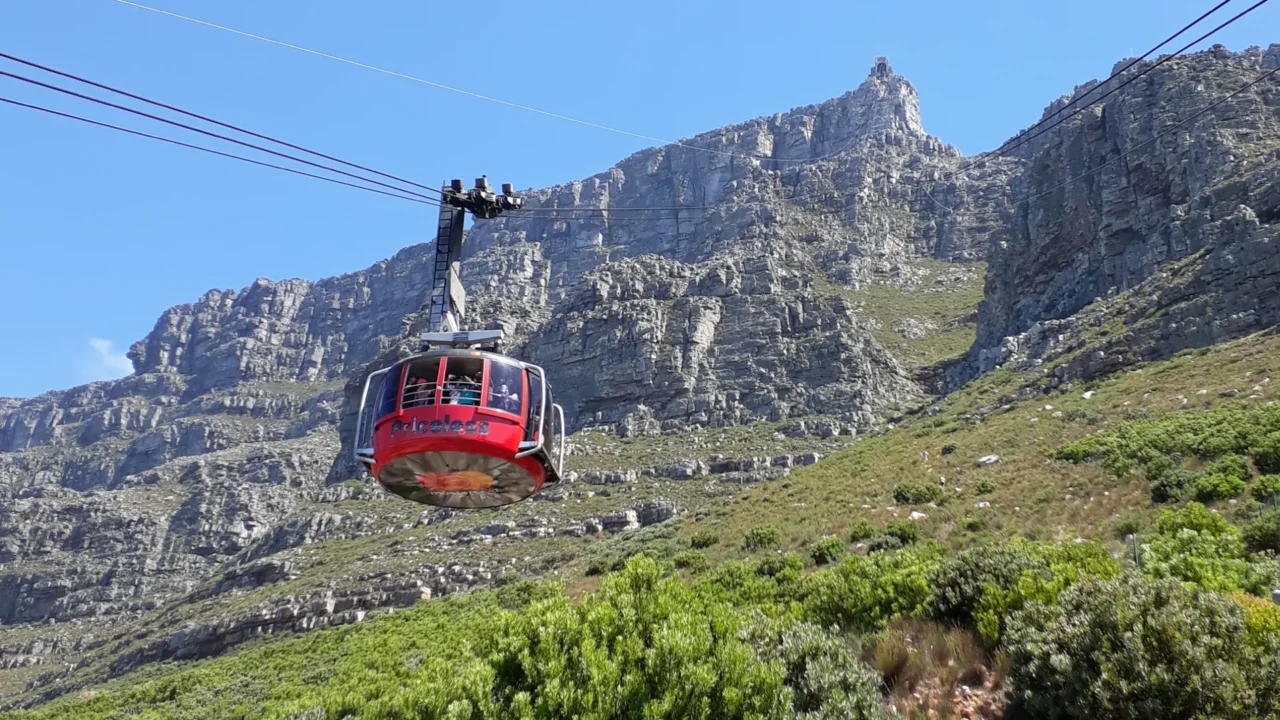
Cape Town
Photo: LizaLotter, Wikimedia Commons (CC BY-SA 4.0)

At a glance
- O. R. Tambo (JNB)
- 20,083,399 passengers · 41% international · 2 terminals · train to the city
- Cape Town (CPT)
- 11,333,736 · 28% international · 1 terminal · no train
- King Shaka (DUR)
- 5,616,199 · 5% international · 1 terminal · 35 km from the city
- Everywhere else
- Six more state airports, effectively no international traffic
Three airports carry nine passengers in ten
South Africa has twenty-two airports with an IATA code and scheduled passenger flights. Nine of them are run by the state operator and file monthly passenger returns; those nine carried 41,135,224 passengers in the 2025/26 financial year.
O. R. Tambo, Cape Town and King Shaka between them carried 37,033,334 of them — 90 per cent. Everything else, in air-travel terms, is a connection.
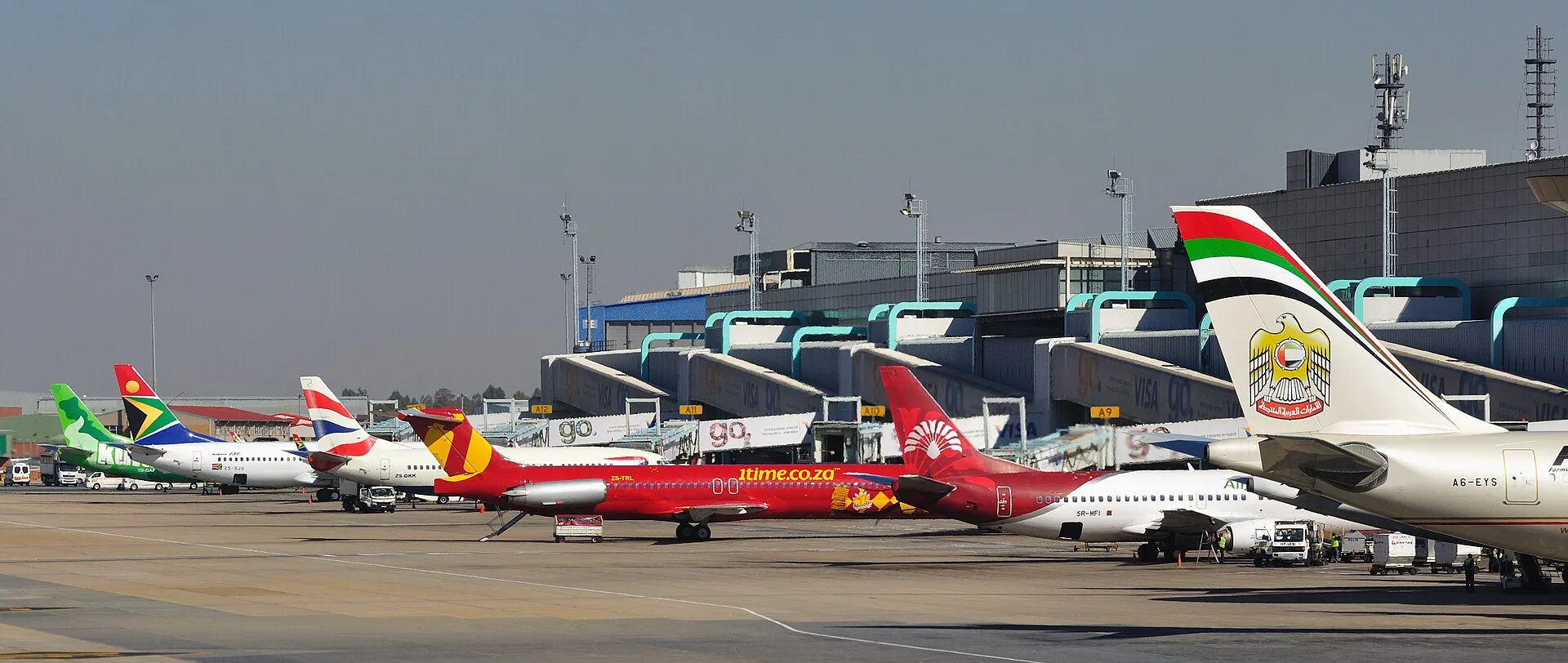
JNBBusiest in Africa
O. R. Tambo
Johannesburg, Gauteng
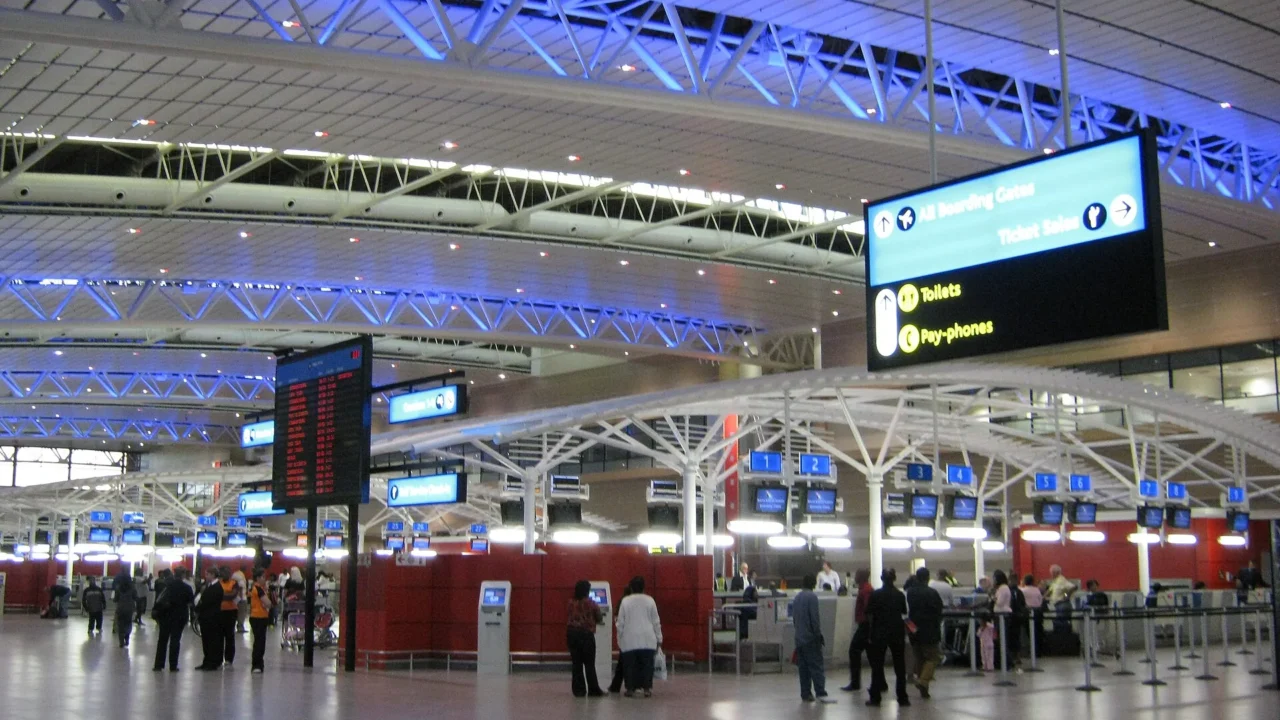
The continent's main long-haul interchange, and the only South African airport with a rail link into the city. Two terminals under one roof, eight to ten minutes' walk apart, and the only one of the nine where more than a third of passengers are international.
FY2025/2620,083,399
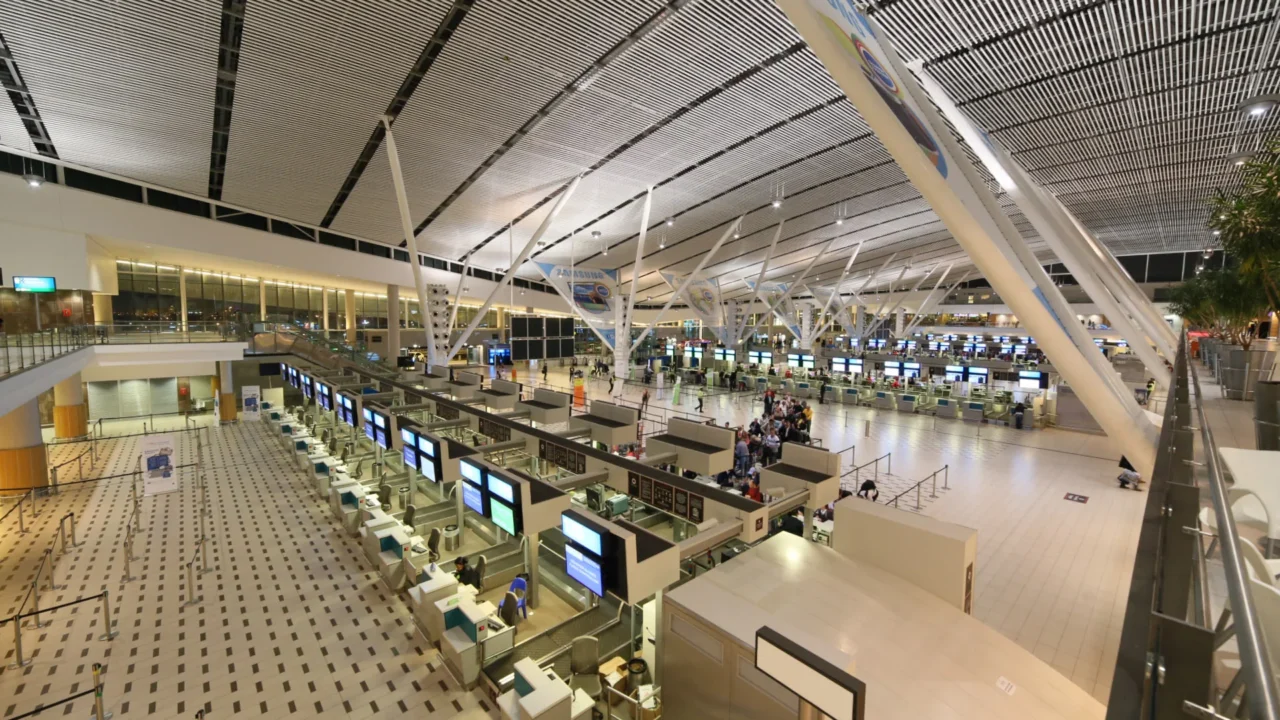
CPTFastest growing
Cape Town
Cape Town, Western Cape
One terminal, two piers, and the shortest connections in the country.
FY2025/2611,333,736
DURBuilt with room to grow
King Shaka
Durban, KwaZulu-Natal
Opened in 2010 and overwhelmingly domestic: barely one passenger in twenty flies international.
FY2025/265,616,199
The concentration is even sharper for international traffic. Only three of the nine recorded any scheduled international passengers at all in 2025/26, and they are the same three. Chief Dawid Stuurman in Gqeberha recorded 70 international passengers for the entire year. George, East London, Bram Fischer, Kimberley and Upington recorded none.
Flying in
Only three South African airports see international passengers
This is the single most useful thing to understand about the network, and almost nobody states it plainly. In the 2025/26 financial year, scheduled international traffic was recorded at exactly three of the nine state-operated airports.
In practice that means a long-haul arrival reaches the Garden Route, the Eastern Cape or the Free State on a domestic connection through Johannesburg or Cape Town. Budget for it, and for the bag re-check that sometimes comes with it.
Total passengers, FY2025/26. Source: ACSA monthly passenger movements. How we check these.
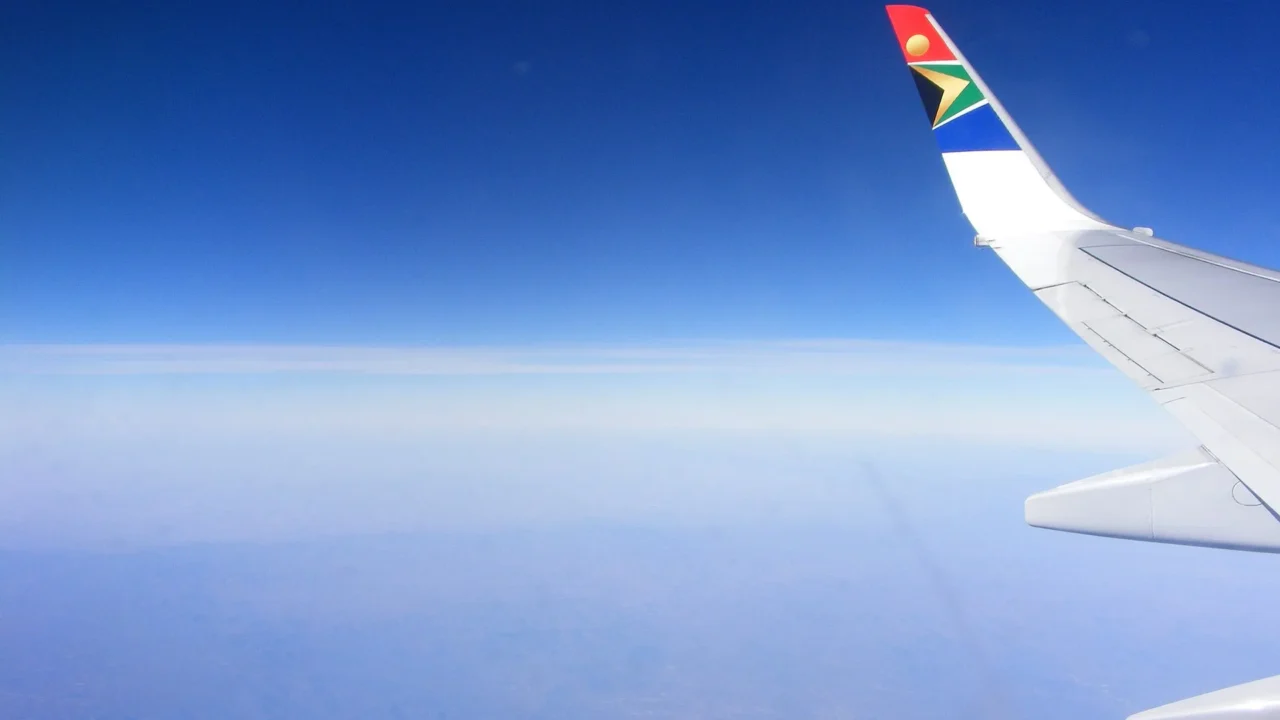
Photo: fading, Wikimedia Commons (CC BY-SA 3.0)

Several of those airports are still officially called “International”. That reflects the customs facilities they hold rather than a route network they operate, and it misleads a steady stream of visitors into believing they can fly into George for the Garden Route. You cannot, from abroad. You fly into Cape Town and drive, or you connect.
O. R. Tambo: the biggest, and the one with a train
O. R. Tambo is the busiest airport in Africa, and it is the default arrival point for South Africa whether or not Johannesburg is where you are going. Of its 20,083,399 passengers in 2025/26, 8,196,340 were international, the highest share in the country at around 41 per cent.
From the operator’s monthly filings · FY2025/26
- 20,083,399passengers, FY2025/26
- +8.4%against the previous year
- 40.8%of them international
- Decemberbusiest month
- Februaryquietest month
- 25 kmto Johannesburg
What is good about it
Choice, above all. It has the widest route network into and out of the country, the most domestic frequencies, the deepest set of lounges, and it is the one South African airport where something to eat is open essentially around the clock.
And it has the only airport train in South Africa. The Gautrain station is inside the terminal complex, and the service reaches Sandton in about fifteen minutes, with the network continuing to Rosebank, Park Station, Midrand, Centurion, Pretoria and Hatfield. In a country where every other airport transfer is a road transfer, that is a genuine structural advantage, and it is worth more in Johannesburg than it would be anywhere else because Johannesburg traffic is the variable that ruins transfer estimates.
Two things to know before you count on it. You need a Gautrain gold card, bought at the station — there is no tapping a bank card at the gate. And the airport service does not run through the night, which matters precisely because the long-haul bank lands between five and eight in the morning. Check the first train against your own arrival on the operator’s own app for your date; we do not publish timetables or fares here because they move and a stale one is worse than none.
What is bad about it
The two-terminal layout. Terminal A is international, Terminal B is domestic, joined by an indoor walkway that is a genuine eight-to-ten-minute walk with luggage. An international-to-domestic connection here means clearing immigration, collecting your checked bag, walking it across and checking it in again — two hours, not one. It is the single most common way a trip through South Africa goes wrong. The full connection guide sets out the clock.
Its weather risk is also the opposite of Cape Town’s, and worth planning around: the Highveld afternoon thunderstorms from November to March, which are short, violent and reliably disruptive to late-afternoon departures.
Cape Town: the easiest airport in the country
Cape Town International handled 11,333,736 passengers in 2025/26, of which 3,128,631 were international — about 28 per cent. It is the fastest-growing of the big three and the one travellers consistently rate most highly.
From the operator’s monthly filings · FY2025/26
- 11,333,736passengers, FY2025/26
- +8%against the previous year
- 27.6%of them international
- Decemberbusiest month
- Junequietest month
- 20 kmto Cape Town
What is good about it
It is one building. The domestic and international piers sit either side of a shared central hall. There is no inter-terminal walk, no shuttle and no second building to find, and that single fact is the whole reason connections here feel so much easier than at O. R. Tambo. An international-to-domestic change still means immigration, reclaim and re-check, but the walk between the two is minutes rather than a trek. Ninety minutes is realistic; two hours is relaxed.
It is also close to where you are going. The city bowl is about twenty kilometres and twenty to thirty minutes off-peak, the Winelands around forty minutes, and the Garden Route begins at the end of a very good road. If the Western Cape is your destination, flying directly into Cape Town removes the Johannesburg problem entirely, and direct long-haul service from Europe and the Gulf is now substantial enough that this is usually available.
What is bad about it
Two things, and they are both structural.
There is no train. None. The Gautrain is a Gauteng system, 1,400 kilometres away, and the number of visitors who arrive in Cape Town expecting to find one is remarkable. Your options are a metered taxi from the official rank, an e-hailing car from the signed pick-up bay, a hotel shuttle or a hire car. The e-hailing bay is not always where the app drops its pin; follow the airport signs rather than the map.
And it has one runway that matters. On paper there are two. In practice 01/19, at 3,201 m, carries essentially all the traffic; the second, 16/34, is 1,701 m and too short for jets. When the north-westerly fronts of May to August bring crosswind and low cloud, there is nowhere to switch to. That is why Cape Town is a winter delay problem rather than a summer one, and why a morning departure in those months is a materially safer bet than an afternoon one.
Cape Town is also the most seasonal of the big three by a wide margin: its December peak runs 46 per cent above its June trough, against about a third at O. R. Tambo. That cuts both ways. December is genuinely full; June is genuinely cheap. The month-by-month figures set out the whole curve.
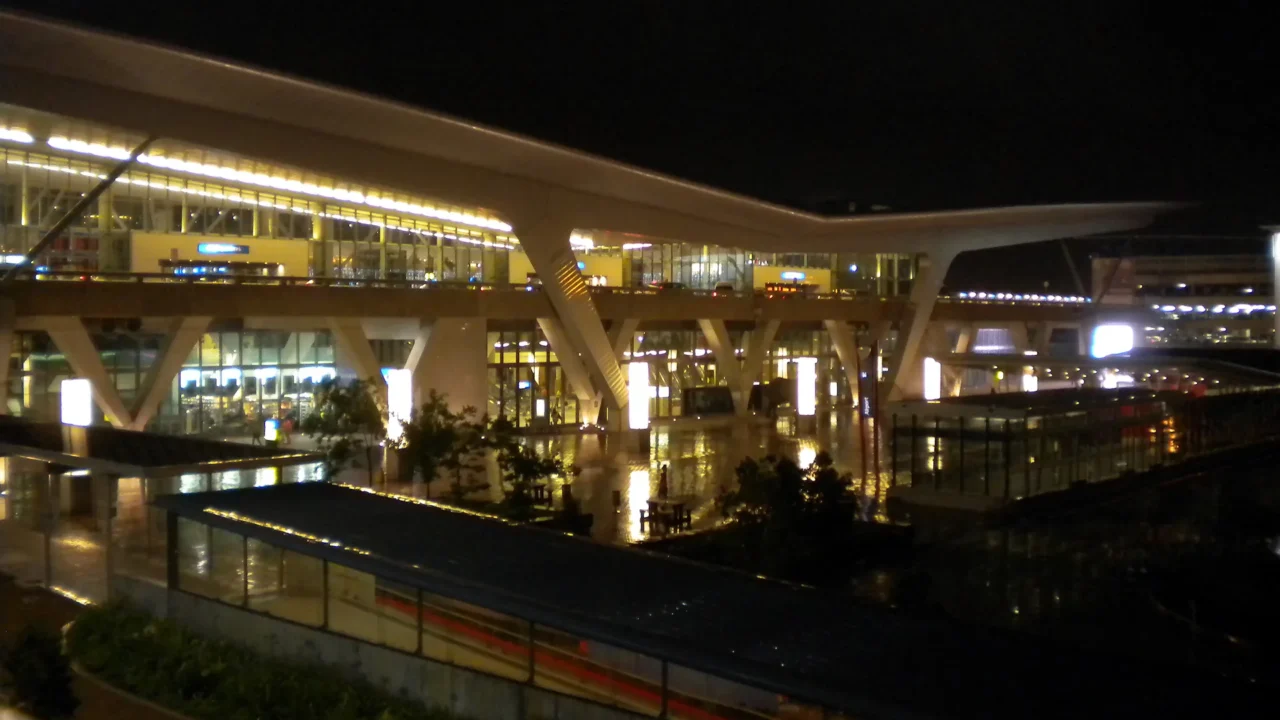
One terminal
Photo: Andres de Wet, Wikimedia Commons (CC BY-SA 3.0)

King Shaka: the one you probably will not fly into
King Shaka opened in 2010, replacing the old Durban International, and it was built with room to grow into. It carried 5,616,199 passengers in 2025/26 — third in the country, and a long way behind the two above it.
From the operator’s monthly filings · FY2025/26
- 5,616,199passengers, FY2025/26
- +11.4%against the previous year
- 5.3%of them international
- Decemberbusiest month
- Februaryquietest month
- 35 kmto Durban
The number that decides how you use it is the international one: 296,387 passengers, about five per cent of its traffic. Compare O. R. Tambo at 41 per cent and Cape Town at 28. In practice almost everyone arriving in Durban from abroad gets there on a domestic connection through Johannesburg or Cape Town, which means the O. R. Tambo transfer described above is, for most visitors to KwaZulu-Natal, unavoidable rather than optional.
The 35-kilometre fact
King Shaka is 35 km north of Durban, not beside it. There is no train. What that means for your booking is more useful than it first appears:
- Umhlanga is about fifteen minutes south of the airport.
- Ballito is about the same distance north.
- Durban city and the Golden Mile are the full 35 km, thirty to forty minutes on the N2 when it is clear.
So a hotel on the coast north of Durban is often a shorter transfer than one on the beachfront. Anyone booking on the assumption that “near Durban” means near the airport has it backwards.
What King Shaka does have is space. It was designed for considerably more traffic than it carries, so outside the December peak the queues are short and the walk from kerb to gate is genuinely quick. Ninety minutes before a domestic departure is comfortable here where it would be tight at O. R. Tambo.
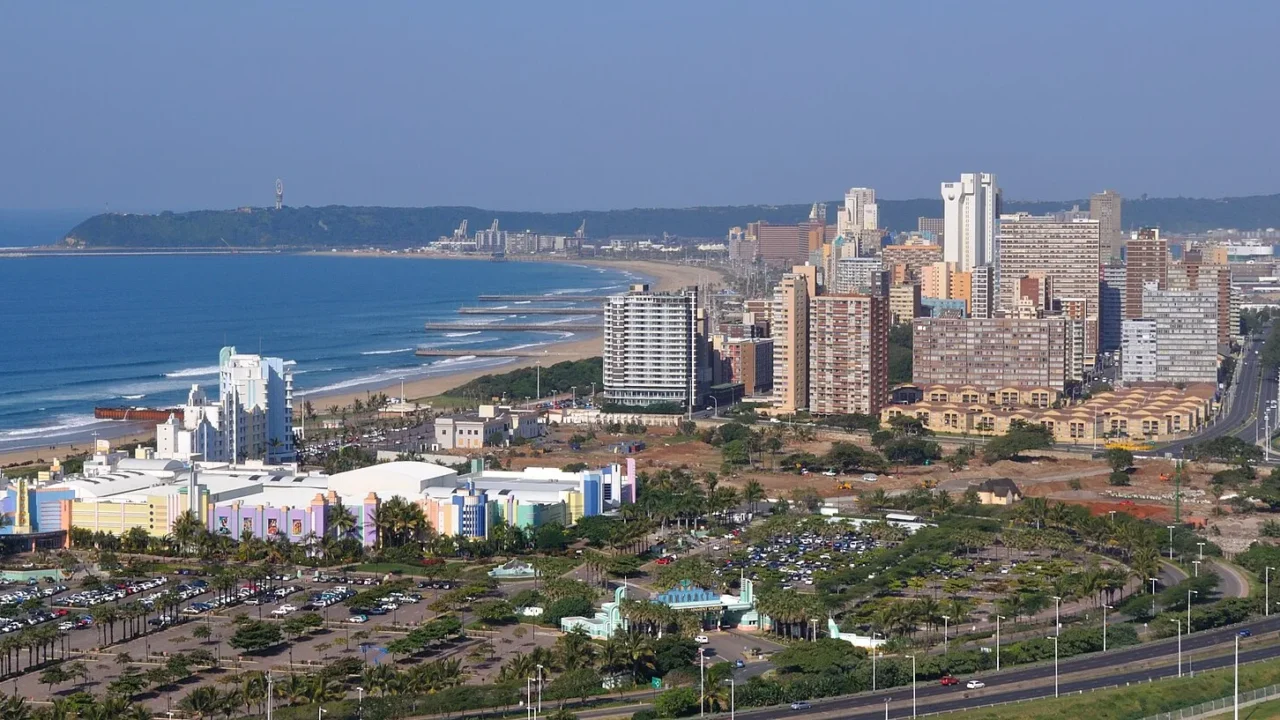
The Durban coast
Photo: Hansueli Krapf, Wikimedia Commons (CC BY-SA 3.0)

Choosing by where you are actually going
- Cape Town, the Peninsula, the Winelands: fly into Cape Town. There is no argument.
- The Garden Route: Cape Town and drive, which is the point of the Garden Route. George Airport exists and is served domestically, but it recorded no international passengers at all in 2025/26, so reaching it from abroad means a connection anyway.
- The Kruger and the Lowveld: Johannesburg, then a domestic flight to Kruger Mpumalanga or Skukuza, or a four-to-five-hour drive. Both of those airports are privately run and file no public monthly figures, which is why they appear in none of the numbers above.
- The Drakensberg: Johannesburg or Durban, then drive. Johannesburg has more flights; Durban is closer to the southern Drakensberg.
- Durban and the KwaZulu-Natal coast: you will connect. Build two hours into the Johannesburg transfer.
- The Eastern Cape and Addo: Johannesburg or Cape Town, then a domestic flight to Gqeberha. Its seventy international passengers in a year tell you everything about trying to get there directly.
- Johannesburg and Pretoria themselves: O. R. Tambo, and take the train.
The six airports you cannot fly into from abroad
It is worth stating plainly, because the names mislead. Six of the nine state-operated airports recorded essentially no scheduled international traffic in 2025/26, and four of them carry “International” in their official name.
- Chief Dawid Stuurman International, Gqeberha — 1,586,070 passengers, of which 70 international.
- George Airport — 939,332 passengers, no international traffic recorded.
- King Phalo Airport, East London — 911,738, none.
- Bram Fischer International, Bloemfontein — 431,359, none.
- Kimberley Airport — 170,738, none.
- Upington International — 62,653, none.
All six are perfectly good airports with real domestic networks, and several are the sensible way to reach their region once you are in the country. What none of them is, in 2025/26, is a point of entry to South Africa. If a booking site offers you a route into one of them from outside the country, read the itinerary: there is a connection in it, almost certainly at O. R. Tambo.
Arriving at night, and arriving in the morning
The hour you land changes the airport more than the airport changes itself, and the three gateways differ in how they handle it.
At O. R. Tambo, the long-haul flights from Europe, the Gulf and North America arrive in a bank between about five and eight in the morning. Passport control is sized for an average rather than that peak, so sixty to ninety minutes to come out is realistic in that window and twenty minutes is realistic at two in the afternoon. The Gautrain does not run through the night, so an arrival at 05:00 may still mean a road transfer; check the first departure for your date before assuming the train solves it.
At Cape Town, the international arrivals are spread more evenly and the hall is smaller, so the clearance is usually quicker. The constraint is on the ground afterwards: the e-hailing pick-up bay and the taxi rank are both signed and official, and at night the right move is to use them rather than accept an offer anywhere else in the building. That is true at every South African airport and it is the one piece of advice worth repeating.
At King Shaka, arrivals thin out quickly in the evening because the schedule is domestic and the last wave lands early. The airport is calm, but it is also 35 km from the city, so an evening arrival with no transfer arranged is the one scenario where the distance actually bites. Book the transfer before you fly, or stay in Umhlanga or Ballito, which are both a quarter of the distance.
Where hiring a car earns its keep
The choice of airport and the choice of transport are the same decision, and the answer is different at each one.
Cape Town is where a hire car is most clearly worth it. The Peninsula, the Winelands and the Garden Route are all self-drive destinations, the roads are good, and there is no train to compete with. If you are picking a car up anywhere in South Africa, this is the airport where it changes the trip.
At O. R. Tambo it is more arguable. If you are staying in Sandton or Pretoria and working there, the Gautrain plus e-hailing often beats a car you will pay to park and then drive in traffic you do not know. If you are heading out to the Kruger or the Drakensberg the following morning, take the car.
At King Shaka it depends entirely on where you sleep. Staying on the beachfront in Durban, a car is of limited use and the parking is a nuisance. Exploring the KwaZulu-Natal north coast, the Midlands or the battlefields, it is essential.
Two mechanical points apply wherever you pick up. South Africa drives on the left, which catches out visitors from most of Europe and the Americas, particularly at junctions in the first hour. And the hire desks at all three airports are in the arrivals area rather than off-site, so the collection itself is quick. The car hire guide covers the two rules that actually matter.
Is Lanseria an option?
For Johannesburg, sometimes, and it is under-considered. Lanseria sits north-west of the city and is a serious alternative to O. R. Tambo for anyone staying in the northern suburbs, Sandton, Fourways or towards Hartbeespoort. It is small, quick to get through and much closer to that half of the metro.
Two limits. It is privately run and publishes no comparable passenger figures, so we have none to give you — estimates circulate widely and we do not repeat them. And its network is domestic and regional rather than intercontinental, so it is an option for the second leg of your journey, not the first.
| IATA | ICAO | Airport | City | Province | Operator |
|---|---|---|---|---|---|
| JNB | FAOR | O. R. Tambo International | Johannesburg | Gauteng | ACSA |
| CPT | FACT | Cape Town International | Cape Town | Western Cape | ACSA |
| DUR | FALE | King Shaka International | Durban | KwaZulu-Natal | ACSA |
| PLZ | FAPE | Chief Dawid Stuurman International | Gqeberha | Eastern Cape | ACSA |
| GRJ | FAGG | George | George | Western Cape | ACSA |
| ELS | FAEL | King Phalo | East London | Eastern Cape | ACSA |
| BFN | FABL | Bram Fischer International | Bloemfontein | Free State | ACSA |
| KIM | FAKM | Kimberley | Kimberley | Northern Cape | ACSA |
| UTN | FAUP | Upington International | Upington | Northern Cape | ACSA |
| HLA | FALA | Lanseria International | Johannesburg | Gauteng | Private |
| MQP | FAKN | Kruger Mpumalanga International | Mbombela | Mpumalanga | Private |
| SZK | FASZ | Skukuza | Skukuza, Kruger National Park | Mpumalanga | SANParks |
| HDS | FAHT | Eastgate | Hoedspruit | Limpopo | Other |
| PHW | FAPH | Hendrik Van Eck | Phalaborwa | Limpopo | Other |
| PTG | FAPP | Polokwane International | Polokwane | Limpopo | Other |
| UTT | FAUT | K. D. Matanzima | Mthatha | Eastern Cape | Other |
| PZB | FAPM | Pietermaritzburg | Pietermaritzburg | KwaZulu-Natal | Other |
| RCB | FARB | Richards Bay | Richards Bay | KwaZulu-Natal | Other |
| MGH | FAMG | Margate | Margate | KwaZulu-Natal | Other |
| MZQ | FAMU | Mkuze | Mkuze | KwaZulu-Natal | Other |
| MBD | FAMM | George Dick Montshioa | Mahikeng | North West | Other |
| SIS | FASS | Sishen | Sishen | Northern Cape | Other |
The open-jaw itinerary almost nobody books
One routing deserves more attention than it gets, because it solves the problem these three airports create rather than choosing between them: fly into one and out of the other.
South Africa is a large country and its two great destinations are 1,400 kilometres apart. A conventional return into Johannesburg means a domestic flight down to the Cape and a domestic flight back, with the two-terminal transfer at both ends of the trip. An open-jaw ticket — into Cape Town, out of Johannesburg, or the reverse — removes one of those transfers entirely and lets the trip run in a line rather than a loop.
The usual objection is price, and it is often wrong: most long-haul carriers price an open jaw as the sum of two half-returns rather than as a penalty fare, and the saving on one internal flight plus the time saved can more than cover any difference. The version that works best for a first visit is in to Cape Town, up the Garden Route or by air to the Lowveld, and out of Johannesburg, which also puts the harder airport at the end of the trip when you know the country rather than at the start when you do not.
Common questions
Which is the best airport to fly into in South Africa?
Cape Town, if your destination is in the Western Cape — it is a single terminal, close to the city and much simpler to connect in. O. R. Tambo otherwise, because it has by far the widest route network and the only airport train in the country. King Shaka is a domestic airport in practice, with only five per cent international traffic.
Can I fly internationally into Durban?
Technically yes, but very few people do. King Shaka recorded 296,387 international passengers in 2025/26 against more than five million domestic, so the route choice is thin. Most visitors reach Durban on a domestic connection through Johannesburg or Cape Town.
Which South African airport has a train to the city?
Only O. R. Tambo. The Gautrain station is inside the terminal complex and reaches Sandton in about fifteen minutes. Cape Town has no rail link of any kind, and neither does King Shaka. The Gautrain is a Gauteng system and does not serve any other province.
Should I fly into Cape Town or Johannesburg?
Cape Town for the Western Cape, the Winelands and the Garden Route, because it removes a difficult two-terminal connection from your journey. Johannesburg for the Kruger, the Drakensberg, anywhere inland, and whenever the fare difference is large — it has the widest network in Africa and the most onward domestic flights.
How far is each airport from its city?
O. R. Tambo is about 25 km from both central Johannesburg and Sandton, with a train. Cape Town International is about 20 km from the city bowl, twenty to thirty minutes off-peak, by road only. King Shaka is 35 km north of Durban, but only about fifteen minutes from Umhlanga and a similar distance from Ballito.
Where these figures come from
All passenger numbers come from the monthly passenger-movement statements that Airports Company South Africa publishes for each of its nine airports, read directly rather than quoted from a press release, with the international, regional, domestic and unscheduled lines checked against the printed total before publication. For all nine airports in 2025/26 they reconcile to the passenger. The period is the South African financial year, 1 April to 31 March, which is why these figures will not match calendar-year numbers quoted elsewhere.
Lanseria and Kruger Mpumalanga are privately run and publish nothing comparable, so their cells stay empty here. The runway lengths at Cape Town come from the published aerodrome data. We publish no fares, transfer prices or timetables, because those are the fastest-rotting figures in travel. The full sourcing note explains the rest.
Related reading: every South African airport by the numbers, connecting at O. R. Tambo, when to fly and getting from the airport into town.