UTNFAUP
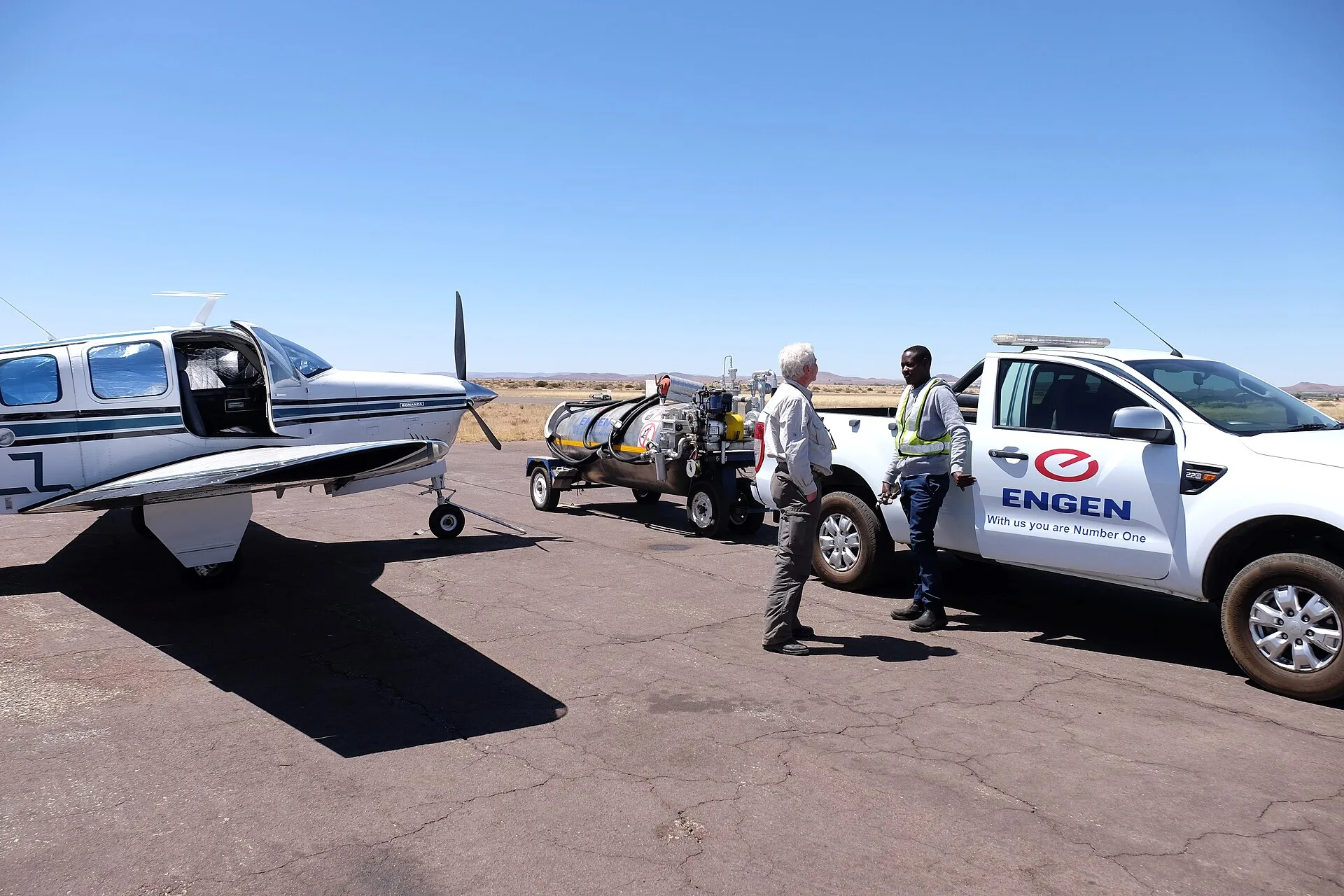
Upington International Airport
Photo: Hp.Baumeler & Kurt Zoller, Wikimedia Commons (CC BY-SA 4.0)

Upington is the smallest of the nine, with 62,653 passengers in 2025/26 — fewer in a year than O. R. Tambo handles in a day. It also has the most extreme seasonal swing in the country: 76 per cent between its busiest and quietest month.
From the operator’s monthly filings · FY2025/26
- 62,653passengers, FY2025/26
- +10.1%against the previous year
- 0%of them international
- Marchbusiest month
- Januaryquietest month
- 7 kmto Upington
The widest seasonal swing in South Africa
Upington’s peak is March and its trough is January, and the gap between them is 76 per cent. For comparison, the national network as a whole swings 33 per cent and O. R. Tambo 31.
At this scale the arithmetic is unforgiving: a single additional weekly rotation moves the monthly figure by a visible margin. That is worth knowing if you are planning to fly here, because schedules are thin and a cancelled flight may not have a same-day alternative.
Why the airport is so large for its traffic
Upington has one of the longest runways in the southern hemisphere, built so that fully laden long-haul aircraft could depart in the heat and thin air of the Kalahari. The runway outlived the reason for it. Today it is a quiet regional field with a strip of concrete that could take almost anything.
It serves the Green Kalahari, the Orange River wine region and the long road north to the Kgalagadi Transfrontier Park.
Practicalities
One terminal, seven kilometres from the town, domestic only. Arrive an hour before a flight and you will still be early. A hire car is close to essential here: distances in the Northern Cape are large and public transport is not an option.
Parking, hire cars and the distances involved
Seven kilometres from Upington, parking a short walk away, hire-car desks in the arrivals hall. Then the distances begin. The Kgalagadi Transfrontier Park gate at Twee Rivieren is about 260 km north on a road that turns to gravel; Augrabies Falls is 120 km west; Namibia is a two-hour drive.
This is the one South African airport where the vehicle matters more than the flight. For Kgalagadi in particular, check the hire company’s terms on gravel roads and on cross-border travel before you book — a cross-border letter must be arranged in advance.
What the airport serves
Upington is the centre of the Green Kalahari, the irrigated strip along the Orange River that produces table grapes and raisins in the middle of a desert. The river itself is the draw: canoeing, the Augrabies gorge, and the vineyards that look impossible until you see the water.
Beyond that the Kalahari proper, and the red dunes of the Kgalagadi. It is one of the emptiest and darkest parts of South Africa, which makes it one of the best for stargazing.
Month by month
Five years of traffic
South African financial years, 1 April to 31 March. Compiled from the operator’s own monthly passenger-movement statements. How we check these figures.
The most seasonal airport in South Africa
Upington is the smallest of the nine airports that publish monthly figures — 62,653 passengers in the whole of 2025/26 — and it swings harder than any of them. Its busiest month runs 76 per cent above its quietest. For comparison, O. R. Tambo moves 31 per cent and Cape Town 46.
And like the other two interior airports, it runs on an inverted calendar: peak in March, trough in January. The traffic here follows the farming year of the Orange River valley, the mining and logistics economy of the Northern Cape, and the close of the South African financial year on 31 March. It is not holiday traffic, and in January — when the coast is at its fullest — this airport is at its emptiest.

The Orange River
Photo: paffy, Wikimedia Commons (CC BY-SA 2.0)

What the runway is for
Upington has a runway out of all proportion to its passenger numbers, and it is the thing the airport is best known for in aviation. It was built long enough, in a place hot and high and dry enough, to take fully loaded wide-body aircraft, and it has been used for flight testing and for technical stops ever since.
That is why the passenger figures look so modest against the infrastructure, and why “International” appears in the name of an airport that recorded no scheduled international passengers at all in 2025/26. The capability is real. The scheduled route network is domestic.
Getting here, and going on
Arriving from abroad means a connection, in practice at O. R. Tambo, where an international-to-domestic change takes two hours rather than one. Why that is.
Most visitors who land here are going somewhere specific: the Kgalagadi Transfrontier Park to the north, the Augrabies Falls downstream on the Orange River, or the Green Kalahari and its vineyards along the river itself. All of them are a drive, several of them a long one, and the Northern Cape is a region where distances are measured in hours rather than kilometres.
- Hire a car, and plan the fuel. Stations are far apart and open hours vary outside the towns.
- An hour before a domestic departure is enough. The terminal is small; the 45-minute check-in cut-off is the fixed point.
- Eat and fill a bottle before you come. Catering at this size tracks the flight schedule and may be closed between services.
- It is hot. This is one of the hottest inhabited parts of South Africa, and a midday departure in summer is a different experience from a morning one.
Common questions
What is the code for Upington airport?
UTN is the IATA code and FAUP the ICAO code.
Why does Upington have such a long runway?
It was built so that fully laden long-haul aircraft could take off in Kalahari heat and thin air. The traffic that justified it has gone; the runway remains.
How busy is Upington airport?
62,653 passengers in the 2025/26 financial year, the smallest of the nine state-operated airports. Its March peak is 76 per cent above its January trough, the widest swing in the country.
How do I get to the Kgalagadi from Upington?
By road: about 260 km north to the Twee Rivieren gate, with gravel sections. Check your hire agreement covers gravel roads, and arrange a cross-border letter in advance if you plan to cross into Botswana or Namibia.