DURFALE
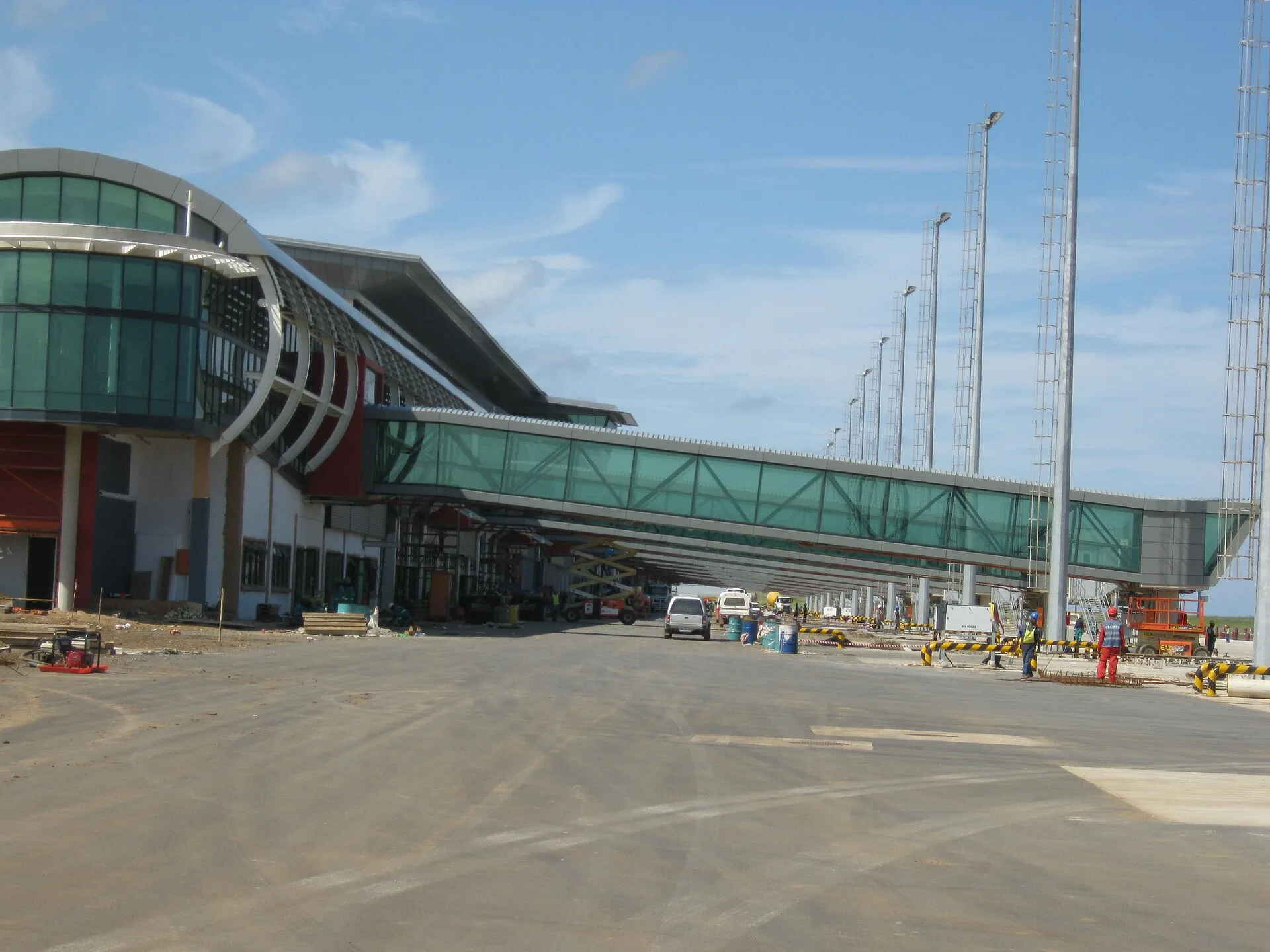
King Shaka International Airport
Photo: Kieron Thwaites, Wikimedia Commons (CC BY-SA 2.0)

King Shaka opened in 2010, replacing the old Durban International, and it was built with room to grow into. It carried 5,616,199 passengers in the 2025/26 financial year — third in the country, and a long way behind the two above it. The thing to know before you book is that it is 35 km north of Durban, not beside it, and that barely one passenger in twenty here is on an international flight.
From the operator’s monthly filings · FY2025/26
- 5,616,199passengers, FY2025/26
- +11.4%against the previous year
- 5.3%of them international
- Decemberbusiest month
- Februaryquietest month
- 35 kmto Durban
Overwhelmingly domestic, and what that means for you
King Shaka carried 296,387 international passengers in 2025/26 against more than five million domestic — about 5 per cent. Compare O. R. Tambo at 41 per cent and Cape Town at 28.
In practice that means most people arriving from abroad reach Durban on a domestic connection through Johannesburg or Cape Town. Budget the connection time, and remember that an international-to-domestic change at O. R. Tambo means clearing immigration, collecting your bag and checking it in again in the other terminal — allow two hours there, not one.
Getting to Durban, Umhlanga and Ballito
There is no train. The options are a metered taxi from the official rank, an e-hailing car, a hotel shuttle or a hire car, on the N2.
- Umhlanga is the closest of the three — roughly fifteen minutes south.
- Ballito is about the same distance north.
- Durban city and the Golden Mile are the full 35 km, about thirty to forty minutes when the N2 is clear.
Because the airport sits between Umhlanga and Ballito rather than beside the city, a hotel on the coast north of Durban is often a shorter transfer than one on the beachfront — worth checking before you book on the assumption that “near Durban” means near the airport.
A single terminal, and generous for its traffic
King Shaka is one building, domestic and international under the same roof, and it was designed for considerably more traffic than it currently carries. The practical effect is that queues are short outside the December peak and the walk from kerb to gate is genuinely quick.
Ninety minutes before a domestic departure is comfortable here, where it would be tight at O. R. Tambo. For an international departure, two and a half hours. The check-in cut-offs are the usual 45 minutes domestic and 60 international.
Parking, lounges, food and Wi-Fi
Parking uses the same three tiers as every other state-operated airport, and the distances are shorter: the long-stay lot is a brief shuttle rather than a journey. Lounges are a smaller set than Johannesburg or Cape Town — Bidvest Premier with day passes, and Slow Lounge for the right bank card.
Food follows the national pattern: full-service restaurants landside, quick-service airside, and trading hours that track the flight schedule rather than the clock. On a Sunday evening after the last departures the airside choice thins out quickly. Wi-Fi is free with a data cap.
Month by month: when King Shaka is busy
The December peak here is domestic and coastal: Johannesburg and the inland cities emptying towards the KwaZulu-Natal beaches. February is the quietest month — the holidays are over, the schools are back, and the summer humidity is at its worst.
If you want warm water and an empty airport, the shoulder months of April, May and September are the answer: the Indian Ocean stays swimmable all year on this coast, which is the thing that distinguishes Durban from the Cape.
Five years of traffic
South African financial years, 1 April to 31 March.
Common questions
What is the code for Durban airport?
DUR is the IATA code and FALE the ICAO code. The full name is King Shaka International Airport. It replaced the older Durban International in 2010.
How far is King Shaka from Durban?
About 35 km north, which is thirty to forty minutes on the N2 when it is clear. Umhlanga is roughly fifteen minutes away and Ballito about the same in the other direction — both are closer to the airport than the city centre is.
Does King Shaka have international flights?
Yes, but few: 296,387 international passengers in 2025/26, about 5 per cent of its traffic. Most long-haul arrivals reach Durban on a domestic connection through Johannesburg or Cape Town.
Is there a train or bus from King Shaka to Durban?
No train. A metered taxi from the official rank, an e-hailing car, a hotel shuttle or a hire car are the options. Shuttle services run to Umhlanga, Ballito and the city.